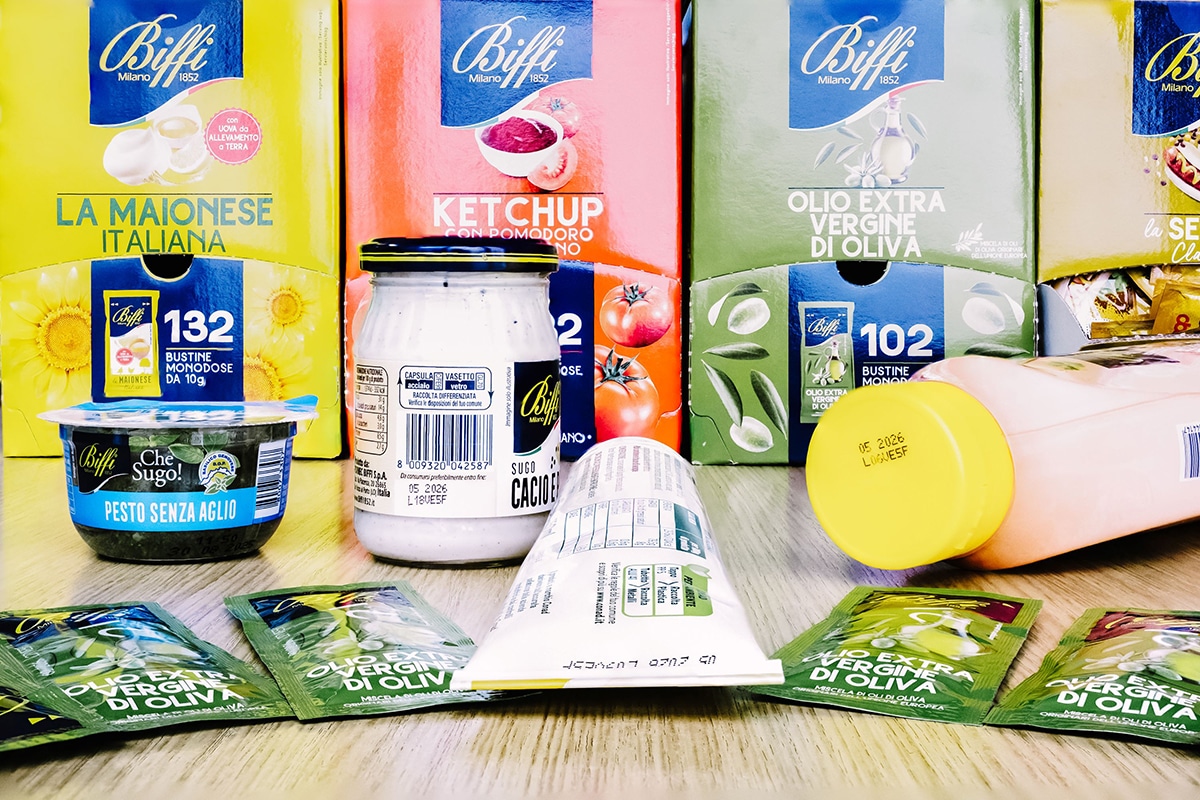
Platform for the food and beverage industry
Accurate monitoring of temperature is of great importance in many applications. When exact temperature values are decisive for product quality, temperature differences must be avoided. The new TCC temperature sensor from ifm, which continuously monitors its own calibration, is perfectly suited for such applications.
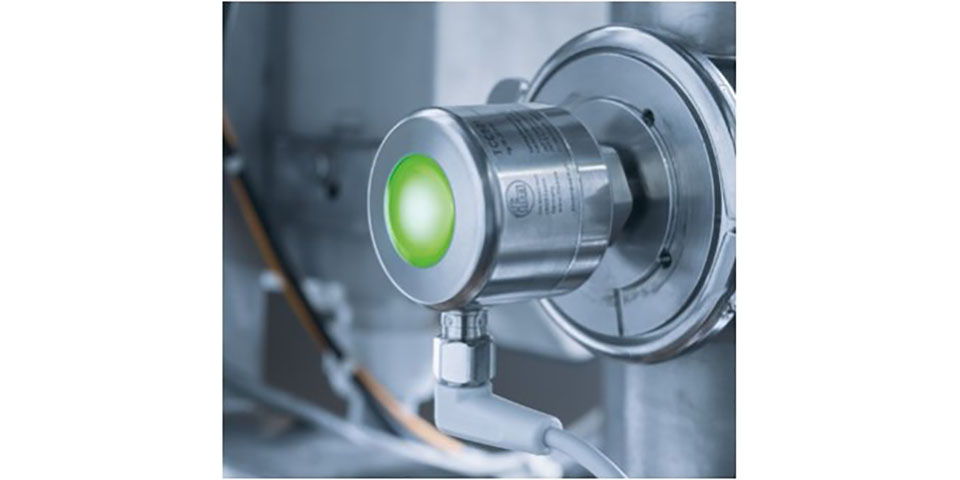
The new TCC temperature sensor permanently compares the measured temperature value with a simultaneously measured reference value. If the deviation falls outside the tolerance range, which can be set between 0.5 and 3 K, the TCC emits an optical signal and sends a notification to the control center. Any malfunction is also signaled. Communication between the sensor and the central unit is based on the digital IO-Link protocol. The LED on the sensor head indicates the current status: green indicates reliable operation, blue indicates a temperature deviation outside the tolerance range, and red indicates a serious malfunction, such as a measurement element failure.
Through IO-Link, the temperature sensor can transfer further data needed for careful diagnosis. This includes the installation date, operating hours, temperature histogram and logs on notifications and calibration check status. Sensor setup is also performed via IO-Link, such as setting the tolerance range. There is also a simulation mode in which the process temperature and reference temperatures can be freely selected to verify that the sensor is correctly integrated into the controller.
Thanks to the fully welded and sealed housing and a new design of the measuring element, the TCC is permanently resistant to external influences such as moisture, thermal and mechanical shock and vibration. The integrated calibration process ensures an accuracy of +/- 0.2 K over the entire measuring range. This makes the TCC perfectly suited for use in temperature-sensitive processes such as food, rubber or carbon processing. Especially in production processes where exact temperature values are decisive for product quality, it is important that the measured values are absolutely accurate. The new temperature sensor allows the plant operator to take action in case of drift instead of waiting for the next scheduled calibration interval. This reduces the risk of losing entire production batches due to incorrect production temperatures.