Platform for the food and beverage industry
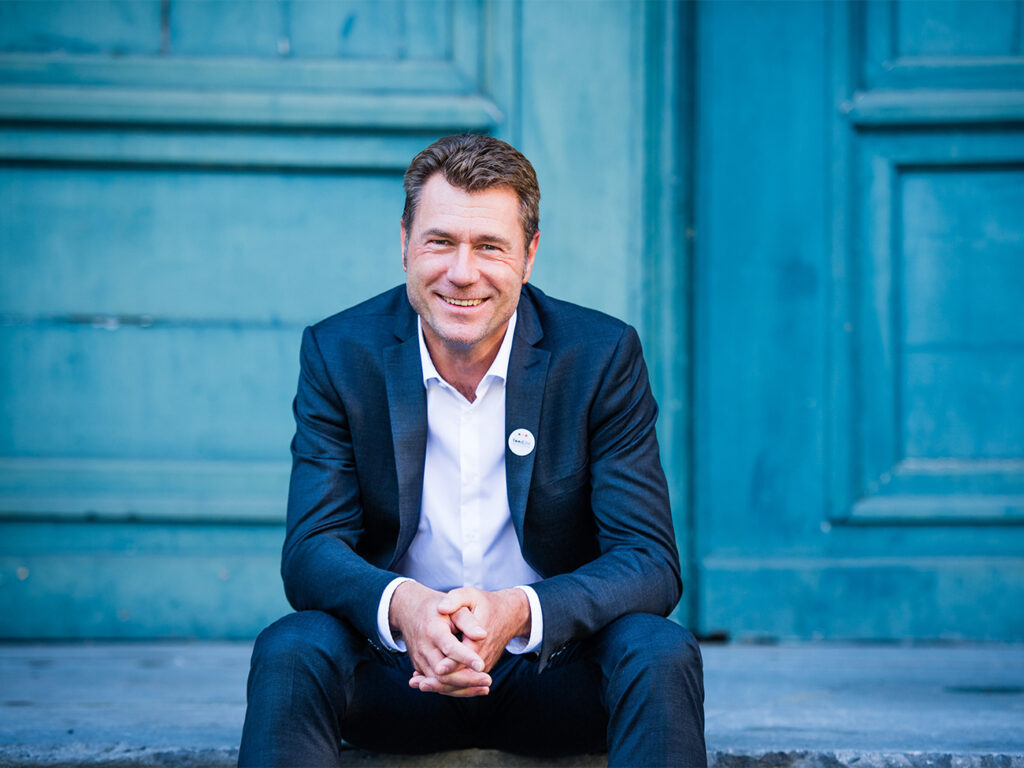
As the voice of an industry with an annual turnover of 55 billion euros, 1.7 billion euros in investments and more than 95,000 employees in the sector, is Fevia, the federation of the Belgian food industry, a crucial market player in our country. More figures? The federation represents 27 sectors and more than 700 member companies producing quality food and beverages. In these economically turbulent times, the challenges are enormous, but there are also fantastic opportunities within reach. We visited CEO Bart Buysse for an interview.
Within the Belgian industry, food has been a leader for years in terms of turnover, investments and employment. The corona crisis brought many elements to the fore, including the importance of balanced nutrition, a smoothly functioning supply chain and extra agility among the various food chain partners. How does Bart Buysse view these and other challenges?
Belgian food companies and their partners are closely following new trends and evolutions. The CEO of Fevia confirms, "Because of longer life expectancy, changing food and consumer needs and additional focus on sustainable production and consumption, our food companies are investing heavily in innovation. Increasingly, we see inspiring collaborations emerging between various chain partners, both locally and internationally. Spurred in part by the corona crisis - which saw our 2020 sales decline by 1.7% compared to 2019 - companies were looking for new avenues to market our delicious and passionately made food products."
As the federation of the Belgian food industry, Fevia has a number of "classic" tasks. But anno 2021, the professional federation is also fully committed to a proactive approach. Buysse: "In addition to our well-known tasks of representation, image protection and writing and defending sector positions, we developed a new strategic vision in 2018 ('Lead, Care, Grow'). Based on this vision, we want to lead as a sector, capture what is going on in society and the media, and translate that information and challenges to the workplace in our 27 food sectors. In other words, we still set our sights on our companies, but set the lens wider to take into account the interests of consumers and society even more than before. By the end of 2021, we aim to roll out our new sectoral sustainability strategy, which fits perfectly with that."
The evolution toward a more sustainable food system is one of the many challenges facing the food industry in our country. Buysse lists several more major yards. "Among the major challenges, I see first and foremost the need to further steer our food companies out of the corona-storm and to get back to pre-crisis levels as soon as possible. The consequences of the Brexit also require follow-up in our strongly export-oriented sector. In the coming months, additional certificates and formalities and stricter customs controls could throw a spanner in the works for our companies. And in the long run, the Brexit must not result in distortion of competition. As a third major yardstick, I see the transition to the digital and circular economy. With a wide range of technologies - from big data to artificial intelligence to robotization - we can write a lot of exciting business stories. Energy efficiency and transition also fits into this framework. In addition, of course, there are the enormous labor market shortages that are very strongly felt in our sector, the continued efforts to be best in class in terms of food safety, the focus on healthy eating patterns in policy (what measures do our governments still have in store?) and the further deployment of e-marketing and e-commerce. These topics are also high on the agenda."
Today, our food companies and their external partners can already present great stories in terms of digitalization and innovation. Buysse: "For example, drones in the field are measuring what harvests will look like in a few weeks. And through big data, certain market players can better predict how consumption will evolve, so that they can better anticipate production capacity, consumer behavior and the purchase of raw materials. One of our members is researching how grain can be grown with a minimum of soil, air and water, allowing it to be grown anywhere in the world or even in space. At the Dubai World Expo in 2022, we plan to present other projects, such as the pollination of plants by mini-drones instead of bees or ways to use water more economically. The collaboration between man, machine and data can all create a fantastic win-win situation."