Platform for the food and beverage industry
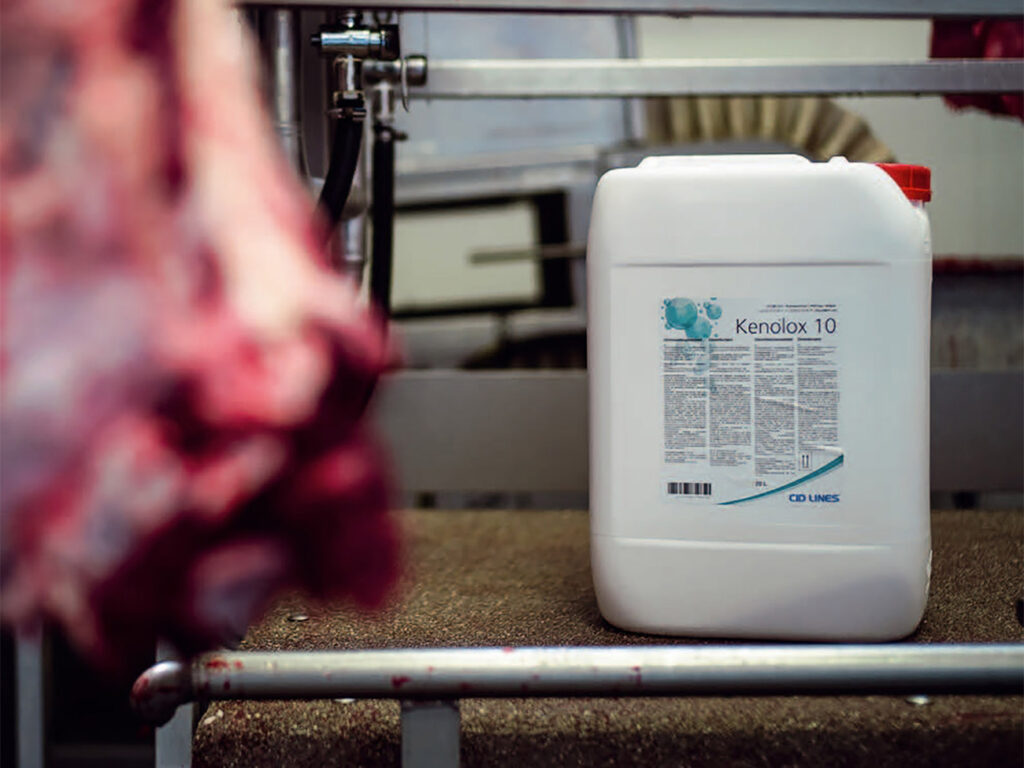
Fogging is a surface disinfection technique that continues to gain importance. This has everything to do with the fact that fogging allows the surface disinfectant to reach hard-to-reach places. With the addition of Kenolox 10 to its portfolio, Ecolab can now offer this technique to its customers. After fogging and respecting the prescribed contact time, the production area is immediately ready for use again. After all, there is no need for post-rinsing.
Two years ago, Ecolab acquired CID Lines. That opened the door for Ecolab to add fogging to its range of cleaning techniques. "Surface disinfection is classically done by wiping, spraying or foaming the surface. We are now adding fogging. A technique in which disinfectant is atomized into the room under high pressure. When the microdroplets precipitate on a surface, they provide a disinfecting effect. Kenolox 10 is specifically approved for use in nebulizer applications and kills off bacteria, viruses and fungi with great effectiveness. Not a substitute for other cleaning methods, rather an interesting addition. Not as a replacement for other cleaning methods, but rather as an interesting addition. Especially for surfaces that are difficult to reach or for persistent contamination, but also for those companies that want to raise their hygiene practices to a higher level, for example by inserting an extra disinfection after the production stop on Fridays," explains Arne Daneels, Marketing Associate Benelux for Ecolab.
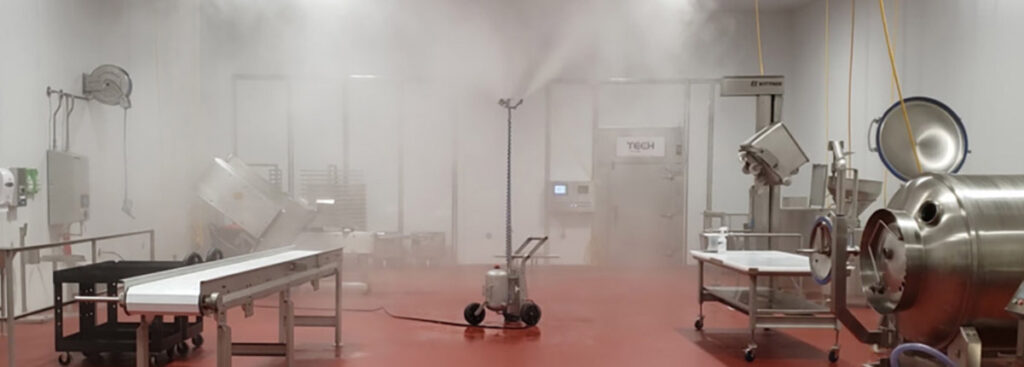
The great advantage of Kenolox 10, based on 1% lactic acid and 1% hydrogen peroxide, is that it contains no alcohol and no need for rinsing due to its favorable MRL value. By the way, Kenolox 10 is non-corrosive and thus suitable for all materials. As soon as the fogging is over, production can start up again immediately. Daneels: "The contact time is four hours. During this period, the ventilation must be turned off and there may no longer be any people in the area to be fogged. Everything happens fully automatically so that dosing errors are excluded. Fogging is carried out for one hour at a concentration of 30 ml/m³. Then the disinfectant is given another three hours to achieve its disinfecting effect. It is important that we always visit the customer to see what the production area looks like. Based on the situation, we look at how we can best place the device or devices for an optimal effect and what protocol the user should apply to ensure disinfection and safety for employees."
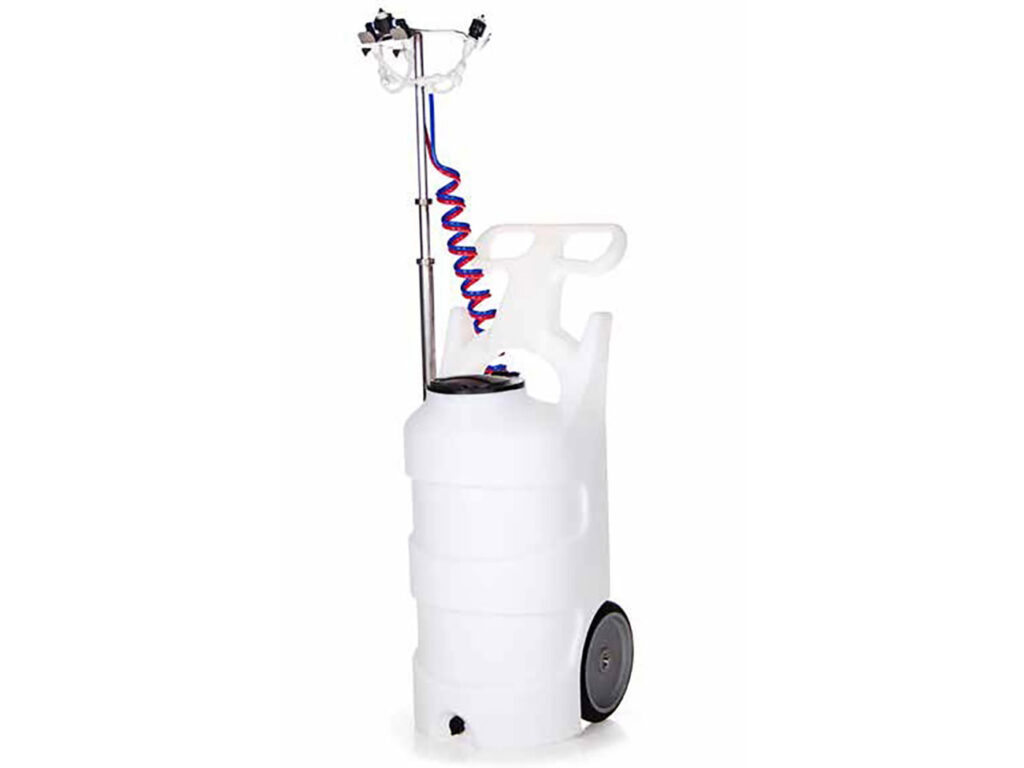
Fogging is widely used in the dairy industry, in ripening rooms, in slaughterhouses, in meat processing plants ... because of the excellent hygienic results it can provide. There is a choice of mobile and stationary wall-mounted versions for the units, both from Nilfisk's Fog-it range. "Food companies particularly benefit from the mobile version which they can then place in the production area they want to treat. By the way, the mobile version has a telescopic mast on which the nozzles are located. That way, we can ensure optimal orientation of the atomization. 1 l Kenolox 10 is sufficient to treat almost 30 m³. So it is a particularly efficient technique. We can also supply a measuring instrument that checks whether the saturation of the air has decreased sufficiently (to below 0.86 ppm) to be allowed to re-enter the room," Daneels adds.


