Platform for the food and beverage industry
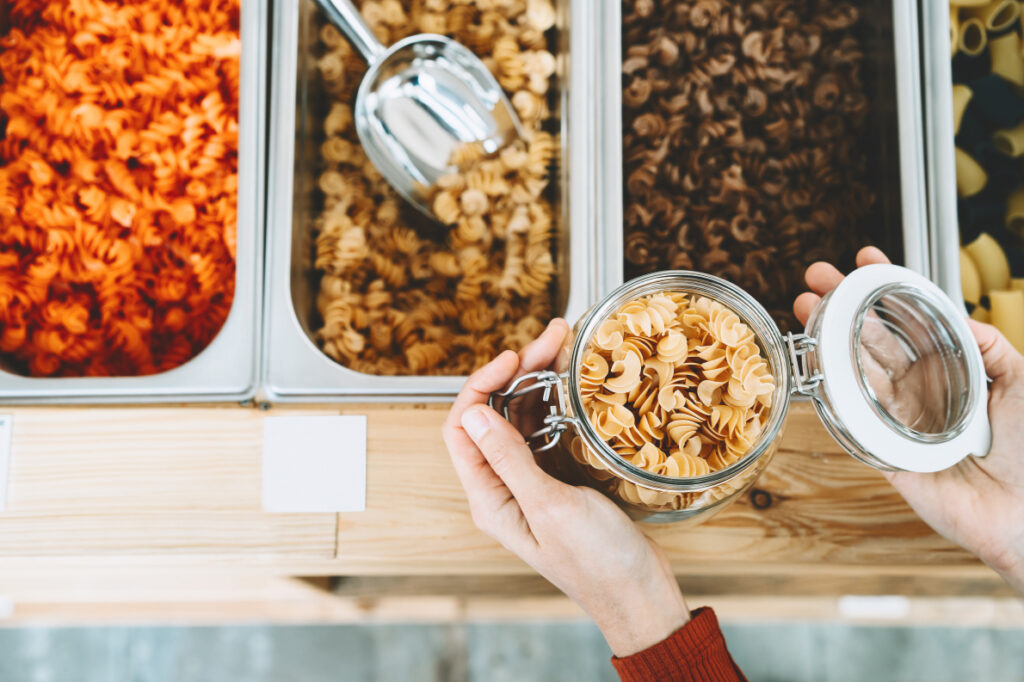
Do you purchase your food products in bulk, without packaging or with your own reusable packaging? Well, that's the new trend in the food sector. Yet the road is still long to develop these new business models on a larger scale. Food companies do want to move in this direction, as long as it does not undermine their final goal. And that is to provide consumers with safe quality products with as little negative impact on the environment as possible. The Anders Verpakt Green Deal can provide them with new solutions.
Today you can already find a whole range of innovative packaging on store shelves that reduces the overall impact on the environment: lighter packaging, recyclable trays, the integration of recycled materials as in PET bottles, boxes whose dimensions are adapted to the products, and so on. In Belgium, these innovations have made it possible to avoid 56,000 tons of packaging per year since 2004. This represents a saving of nearly 5 kg of packaging per year per person.
Read all industry and company initiatives at Verpakkingen2025.be
But packaging prevention has its limits. Companies cannot keep reducing the thickness of packaging. Moreover, consumption patterns have changed. We choose individual portions more often, we pick up our meals or have them delivered, and at the same time we want to use less or no packaging at all. This is pushing companies to innovate in other areas, such as selling products in "bulk," offering meals in reusable "food containers," or offering beverages in refillable glass or plastic bottles.
For Ann Nachtergaele, who is responsible for sustainability at Fevia, several innovative packaging systems can be considered. As long as they are also economically feasible: "Companies are open to all possible solutions, but ones that do not compromise the quality of their products, with no waste and as little environmental impact as possible. There are several ways to achieve that goal. To develop new systems on a larger scale, such as these that are "packaging-free," we need sustainable business models. That is not always obvious," she says.
In other words, if you buy a salad in a reusable food container, but you forget it or it is damaged and no longer usable, you have to throw it away and buy a new one. The effect of your act is then ultimately a zero operation. Therefore, we should no longer focus only on the effect of packaging per se. We must also rethink the delivery and consumption model for packaged food and food products.
That is the premise of the Green Deal Otherwise Packaged, a collaborative effort to get the entire food chain to "package differently. How? By working toward completely banning single-use packaging or encouraging reuse. The goal of the Green Deal Anders Verpakt is to find new ideas and innovative projects and then help companies test these new business models. For example, one model that is already proving successful in Belgium and across Europe is the transportation of fruits and vegetables in a circuit of reusable plastic containers, avoiding the use of cardboard boxes and other unnecessary packaging. Another example is a shared system of reusable food trays between different pasta suppliers "on the go," at the city level.
Several members of Fevia participate in the Green Deal Differently Packaged. The official signing will take place on March 11 in the presence of Ministers Crevits and Demir. There, two food companies illustrate how the Green Deal helps them for developing new project ideas.
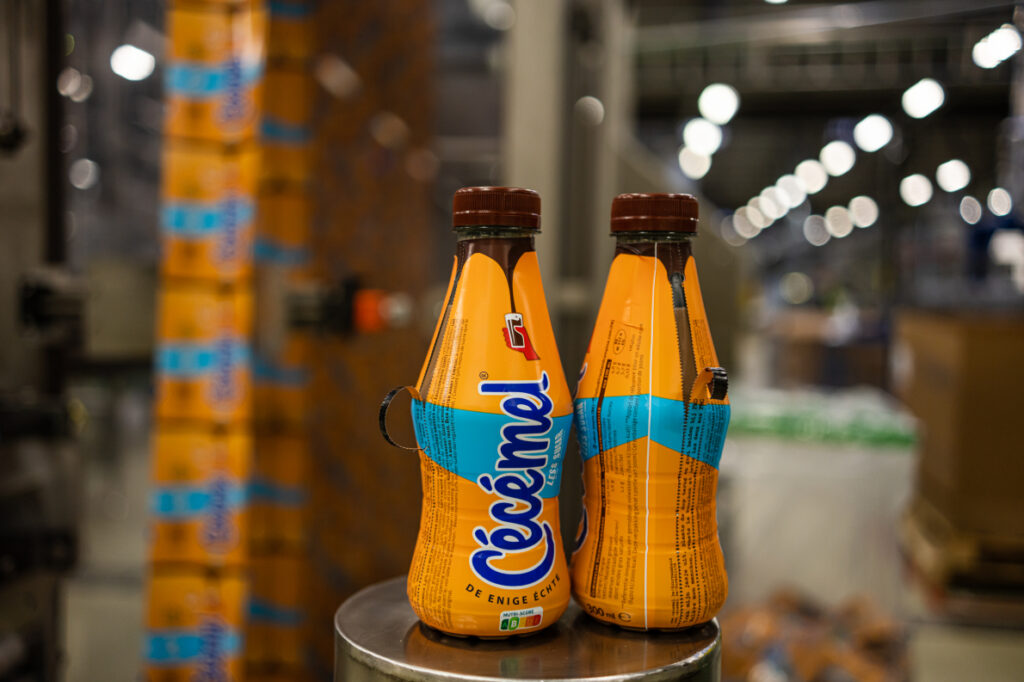
FrieslandCampina is a dairy cooperative that has already made substantial investments in its Belgian production sites to make packaging more sustainable. As part of its sustainability strategy "Nourishing a better planet," FrieslandCampina's ambition is to aim for 100% reusable or recyclable packaging by 2025.
Most recently, FrieslandCampina invested in a third PET line for its Aalter production facility. Ger Standhardt, packaging developer at FrieslandCampina, sees the Green Deal Anders Verpakt as an opportunity to do even more and think out-of-the box:
"With our internal tool RESPACKT, we constantly monitor the most sustainable packaging options for our products. For example, in recent years we made the choice for more sustainable bio-based beverage cartons and we were also the first dairy player in Belgium to opt for 100% rPET. We want to keep making further steps towards our ambition to have all our packaging recyclable or reusable by 2025. We are strongly committed to making packaging more sustainable. We are convinced that a diversity of packaging has its place in the market, taking into account that it can preserve the quality of the product. For example, for dairy products, the light barrier is very important and being able to respond to consumer convenience. The Green Deal Anders Verpakt opens up opportunities to look at sustainability in a broader perspective. As a cooperative, seeking partnerships is in FrieslandCampina's DNA. The Green Deal Anders Verpakt is a partnership that fits in with this."
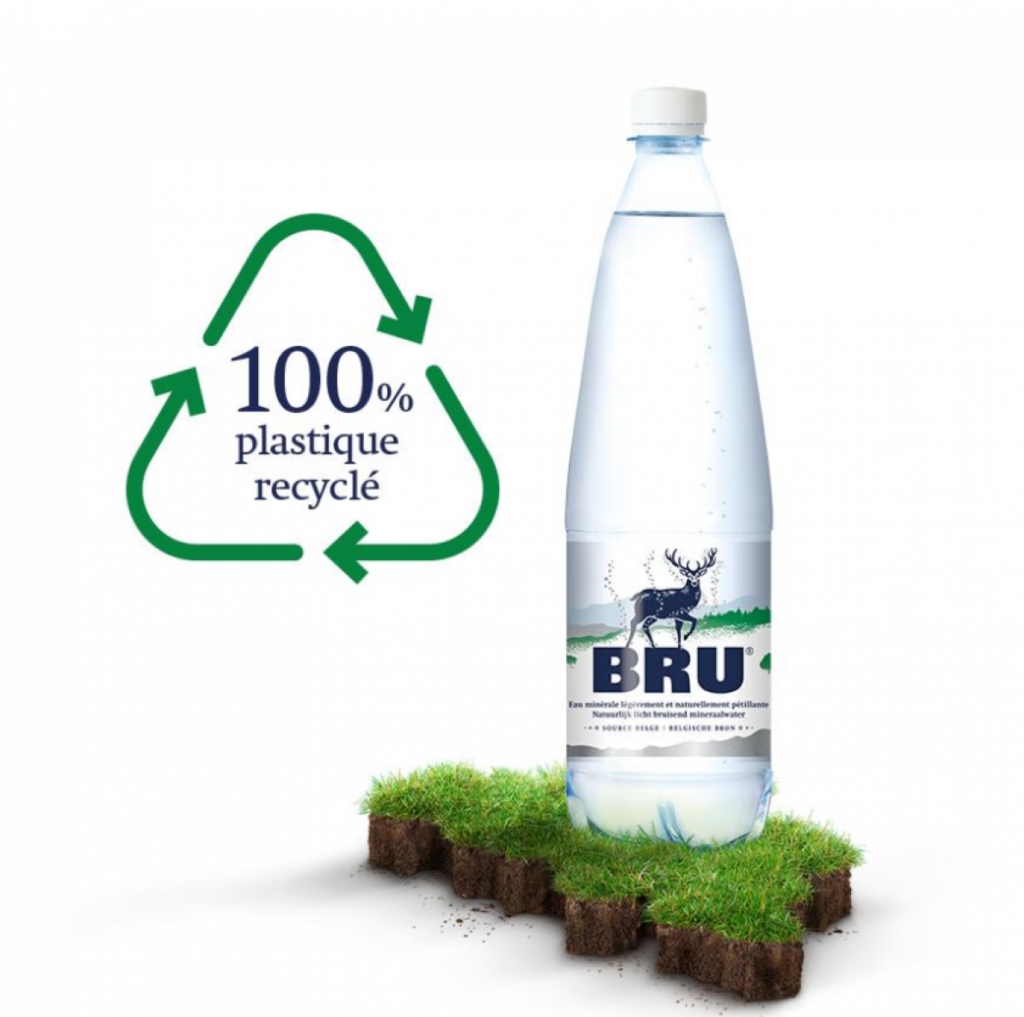
Spadel wants reduce its plastic footprint by 15% by 2025, integrate 100% recycled or reused materials into its packaging, collect and recycle all packaging it puts on the market, etc. Christophe Scharpé, Head of Corporate Affairs, explains why Spadel is participating in the Green Deal Anders Verpakt:
"We aim to double our reusable packaging by 2025. In this way, we will ensure a reduction in disposable packaging. Currently, 10% of our volume is sold in reusable packaging (mainly 19-liter glass bottles and decanters that can be returned). We want to innovate through new business models or by developing new types of reusable packaging. We will share our experience, but also learn from the experience of other participants. We look forward to new ways to get our water to consumers.