Platform for the food and beverage industry

The food industry is all about hygiene. Smooth stainless steel, to which dirt cannot adhere, is therefore the preferred material of this industry. That makes Blasting Technology to a welcome partner. Because with the Aartselaar-based company's blasting solutions, you get optimal surface quality. And to get flawless operation, more and more steps are also being taken in automating the blasting process.
The food industry likes smooth surfaces to which contaminations cannot adhere. Therefore, to achieve optimal surface quality, blasting is a commonly used technique. In food technology, this even more specifically involves glass bead blasting. Edwin Houweling, managing director Blasting Technology: "Glass beads owe their popularity to their round surface. They make a difference by being less likely to break. Because the less they break, the more control you keep over the process. That is why we have had quality beads in our range for more than thirty years."

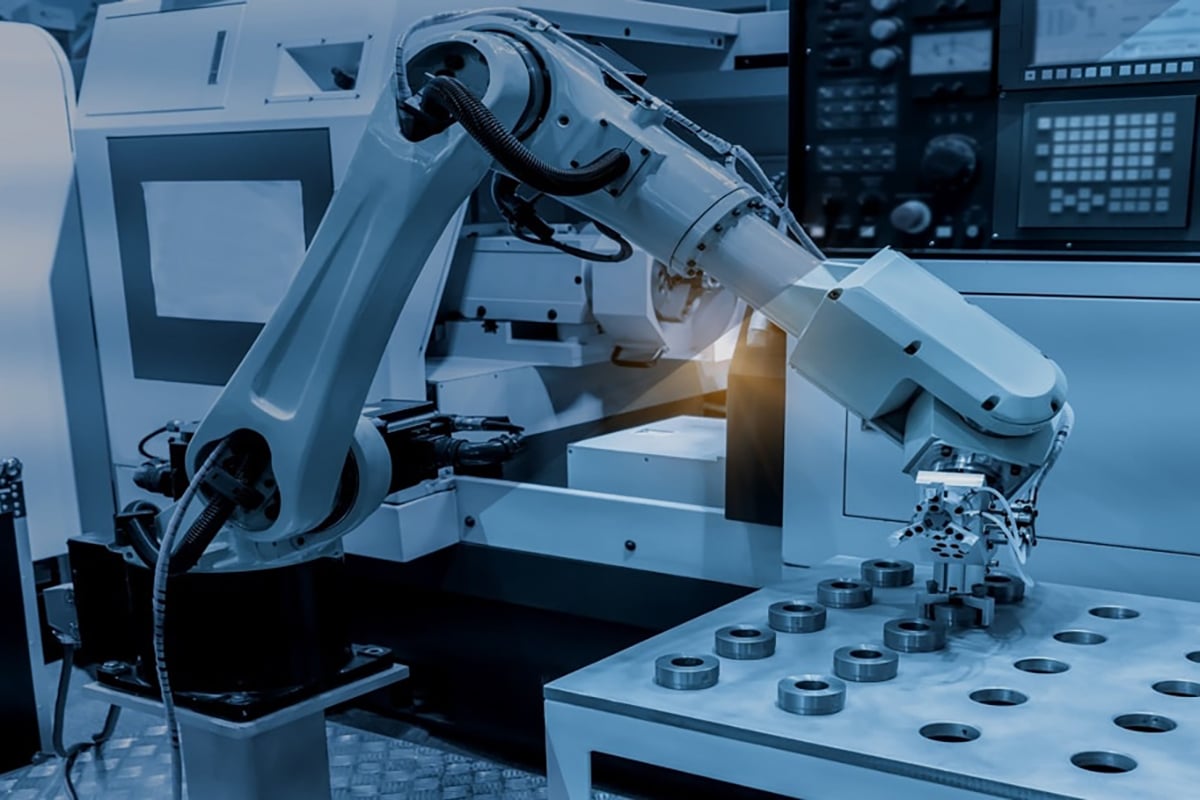
Blasting Technology provides customers not only with blasting media, but also with blasting equipment tailored to their needs. "An efficient blasting solution is actually always a bit of customization, if only to get the parameters absolutely perfect," says Houweling. "Together with the customer, we can often refine the process, thus reducing costs." The basis for this is the wide range, from small to large, from simple to complex, from manual to fully automatic. "Everyone can find something to their liking with us. We do notice a trend in recent years toward more automated work to still guarantee consistent quality."
A nice solution to meet this without having to opt for a fully automated system is the blast cabinet with display. Houweling: "The operator only has to indicate the product. The settings required for a perfect result (abrasive, pressure, time, speed, etc.) are already pre-programmed. One way to increase quality. A second approach is better monitoring of the process. By collecting process values, you can see what actually happened and trace where things didn't quite go as they should have. An ideal basis for further optimizing the process to reduce costs and downtime. These are developments that are already well established in aviation, but that we are now seeing trickle down to the food industry."