
Platform for the food and beverage industry
If the recent salmonella outbreak at Ferrero proved one thing, it's that food companies need to take more targeted action in identifying contamination in production. We need to move toward a new culture of quality. A culture where food safety is not seen as a cost, but as the cornerstone of how a company wants to market itself. Only then will the means and the people be there to detect contaminations, to look for the source in a targeted way and to tackle it. At least that was the conclusion of the roundtable discussion organized by Quality Days on listeria monocytogenes.

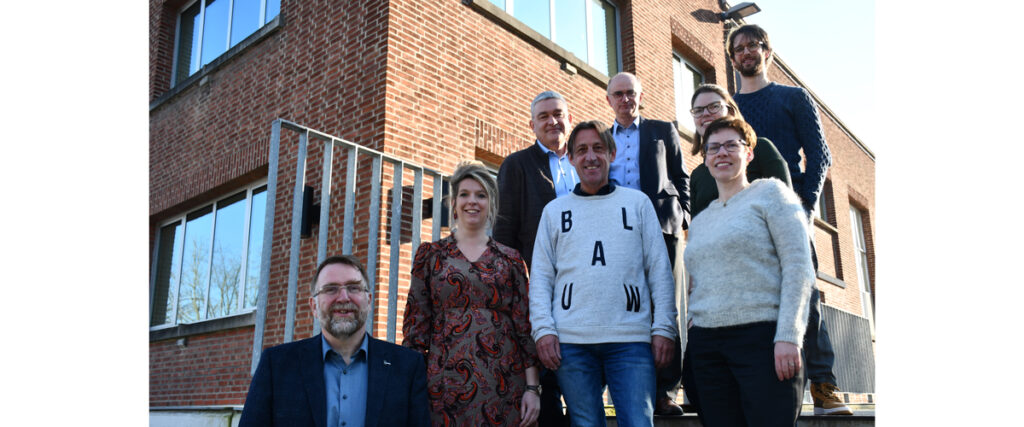
Listeria monocytogenes is a major concern for food companies. More contaminations in food have been detected in recent years, as confirmed by figures from the FASFC and its European counterpart EFSA. EFSA reports also show that the number of human infections with listeria monocytogenes is increasing. But whether this is due to more thorough measurements or a rise in listeria bacteria is not immediately clear. What is certain is that companies need more insight into this issue. Are we doing a sufficiently thorough search for listeria in food companies? What are all the aspects involved? What is the best approach to listeria control going forward? Who all has a responsibility in this? ... The Quality Days therefore brought together a panel of experts who examined the subject of listeria, in depth and in breadth. At the table sat: Wouter Burggraaf (Burggraaf and Partners), Joost Buysschaert (Epacco), Vera Cantaert (FAVV), Koen De Reu (ILVO), Jonathan Hallaert (Fevia), Ellen Lambrecht (ILVO), Katrijn Verbeek (Lavetan) and Bavo Verhaegen (Scienscano).

One of the first questions the experts were asked was exactly how, in addition to raw material and product analysis, the production environment should be checked for contaminants. "Good environmental control is necessary to verify good practices. How that control is carried out does make a world of difference," De Reu opens. "Rubbing a cotton swab (type of ear stick) over a small area is really out of the question. You don't create reliable results with that. Practical experience in quite a few companies shows that thorough sampling gives a substantial difference in detection of the pathogen compared to the current sampling performed by the companies. Thus, it is no exception that companies detect 5% positive environmental samples, where thorough sampling performed by ILVO gives rise to 40%. You have to know the critical points on the one hand, and on the other hand the will has to be there to detect the pathogen . This requires a thorough and structured sampling of large surfaces with suitable swab material, sampling of hard to reach places and dismantling are also a must. The approach, of course, must go beyond just surface sampling. It already starts with checking raw materials coming in, frequent checking of your finished products. You also have to engage with machine suppliers for hygienic design and invest in buildings and the flow of your production."

Today, research can go beyond simply determining whether listeria monocytogenes is present. Verhaegen: "Using 'whole genome sequencing,' the DNA or passport of each bacterium can now be completely exposed. This is done by default for every strain isolated from sick people. In this way, more and more outbreaks are being identified where people are infected with the same strain. By searching further, the source can be more easily identified. Persistent listeria strains are often present in food plants, so they can also infect people over a longer period of time. So the issues are becoming more and more unraveled by the new analysis technique. The goal of whole genome sequencing is certainly not to point fingers and assign blame to food companies but rather to further control and combat pathogens. This will allow us to pinpoint sources of contamination so that targeted actions can be taken."

An approach that few food companies are keen on for now. Burggraaf sees that too. "In the Netherlands it has already resulted in a lawsuit in this way, which led to the closure of the company. The scare is well underway, because you get, as it were, a fingerprint of listeria monocytogenes with that whole genome sequencing technique from that particular plant. And it doesn't lie. If you know there are contamination problems in your production, you just have to take preventive action and not wait for it to come to claims. Otherwise, you are negligent. It's as simple as that. The scandal with a listeria contamination in vegetables a few years ago ended up with tens of thousands of tons of food recalled from 108 countries, 70 million in direct damage, huge amounts of stock market value evaporated and nine deaths because there was not a quick enough response. In Europe, one in ten people still get sick from eating food. In America, it is even 25% of the population. Surely we should not accept that as a food industry in 2022? We must invest in a food safety culture so that we no longer have to pay recalls."

However, the closure of a company is only the last resort for the FASFC. "Inspections are always unannounced with us. The scope of the inspection can vary: hygienic practices, HACCP, tracing ... and be supplemented with official sampling. Using a checklist of questions, the company is then given a score of 1, 3 or 10 on each question. If we identify problems, we initially sit down with the company in question to draw up an action plan. An action plan that should remedy all non-conformities. Only when things get out of hand and no thorough steps are taken in the right direction do we proceed to shut down. But we won't sue. That is only possible if the public prosecutor or the consumer takes matters into their own hands," Cantaert adds.

Listeria control thus begins with a good plan of action. However, the legislature does not prescribe exactly how that should be done. Fevia is therefore currently working on a document, an autocontrol guide, which will provide food companies with some solid tools to detect and tackle listeria monocytogenes. "Surely 50 to 60 samples per month will be the bare minimum in certain high-risk sectors," Hallaert says. "With this initiative, we want to help our members develop an active safety culture. We also want to organize more education and training around this topic. Because we notice that there is a need for it." For ILVO, listeria analysis is best done by an accredited lab. "We are working with several food companies in a project on listeria contamination. In practice, self-tests turn out to give a lot of false positives. You really have to know what you are doing for a reliable measurement," Lambrecht said.

When an infestation is identified, cleaning is often looked at to solve it. "We as a cleaning industry certainly want to participate in that," Buysschaert points out, "but we can't do it alone. No matter how well you clean the surfaces, if you don't address the source of the contamination, the problem will stubbornly return. For that, you have to bring different partners to the table." Verbeek also confirms this. "You notice that the knowledge is not present everywhere. Many food companies do not know exactly how to deal with such a contamination. It is therefore a particularly complex matter, where the listeria threat can come from all angles. From the raw materials to a non-hygienically designed facility or too little awareness of the flow between high and low risk zones. In addition, interpreting the results also requires the right knowledge to identify and remediate persistent contamination, for example. A further analysis that happens too little today, because of the price tag and the scare of the scale of the problem."

Lambrecht: "Our listeria guidance program also shows that when listeria monocytogenes strains are isolated, it is best to check whether it is a house strain or rather a temporary passerby. This is done at ILVO with simple techniques that do not involve databases." Buysschaert is also convinced that a total approach always pays off: "If you can solve listeria, then indirectly you actually solve many other problems that stand in the way of food-safe production." Today, however, the quality manager is still too much the jack-of-all-trades, especially in smaller food companies, and does not get the time needed to permanently take the right actions and adjust procedures. "It doesn't have to be so difficult. Today we have the knowledge and resources to deal with listeria. It's a matter of good will and a structured approach. The fact that more and more figures on infections are coming out should be an incentive for the industry. It should help everyone see the need for a food safety culture," Burggraaf stressed. "Actually, we are all working toward the same goal. From food companies to control agencies, from cleaners to labs, from research institutes to industry federations. Ensuring that a product that is safe for consumers is put on the market," Cantaert concludes.


