Platform for the food and beverage industry
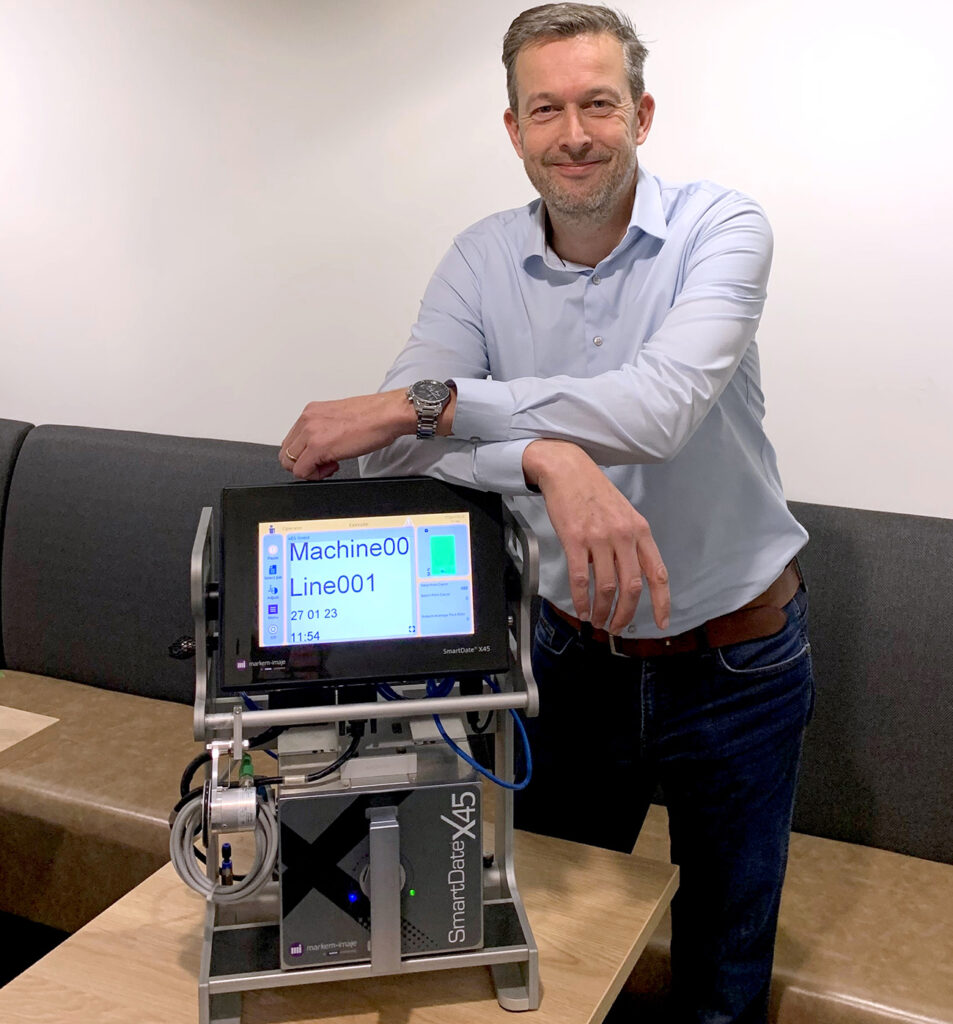
"Improving efficiency, cost reduction, compliance and brand protection. These are four pillars that are very important to our customers, and we as Markem-Imaje are strongly committed to them," said Dennis Jonker, sales director at Markem-Imaje responsible for North-West Europe.
"One way you can improve efficiency is by reducing downtime. That's a pillar that everyone in the food sector is working strongly on. Cost reduction is also a major focus. This has to do with minimizing having to repeat work. Think, for example, of erroneous coding that results in packaging having to be repackaged or processed again. The third pillar - compliance - is also something we are seeing a lot more of. It has everything to do with the traceability of products throughout the chain. Manufacturers have to meet increasingly strict requirements from within the chain, for example from supermarket organizations. Finally, more attention is being paid to brand protection. To respond to this, several years ago we purchased the company Systech, which focuses on product authentication and, for example, promo coding. With this software and our printers, we are able to code products in such a way that they are recognized as unique throughout the chain, all the way to the consumer. We also acquired the company Blue Bite. It specializes in software that allows consumers to scan barcodes, for example, and retrieve information about the product. Think of information about the product's ingredients, instructions for use, safety information and the like. We come across this desire from the market more and more often."
"Another trend we are seeing is that there is more demand for vision systems. It is increasingly important not only to apply coding correctly, but also that this coding can be checked for legibility and content. This trend may have to do with the fact that fewer workers are walking around the factory, which means that visual checks have to give way to automated checks. We solve this with vision systems. We don't just add a camera, we integrate the whole thing into an automation system." Vision technology is already commonly used in the pharmaceutical sector, but interest is also growing in the food sector. "Quality requirements are increasing, but due to the lower number of operators on the shop floor who can perform the checks, this type of system offers a solution."
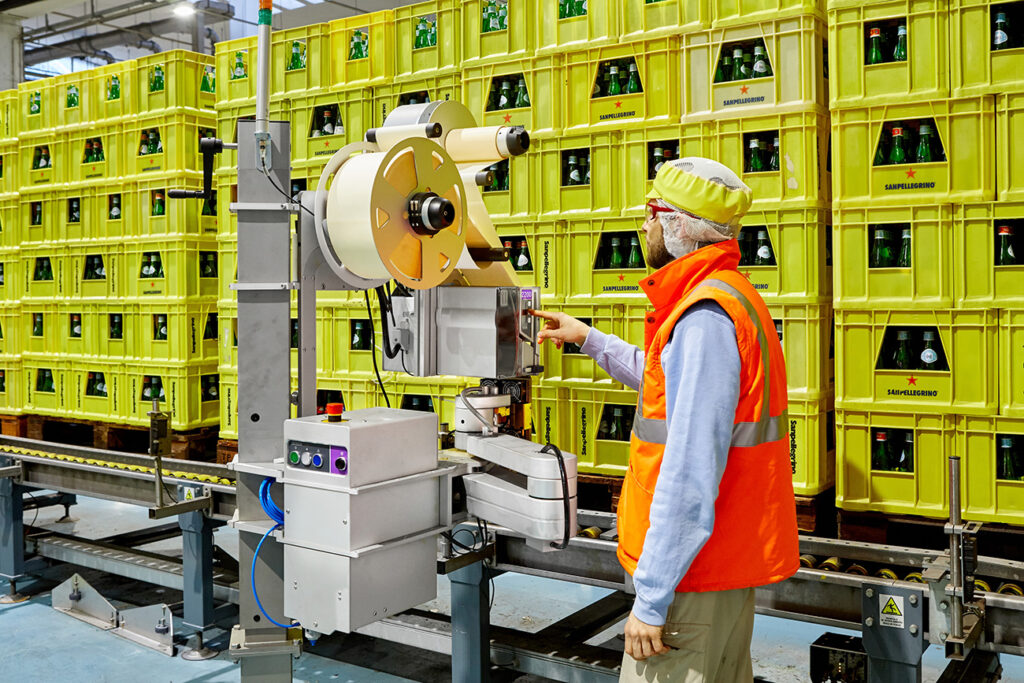
"We are able to address those challenges that customers face and also provide them with a solution. For that, we have a holistic approach," Jonker continued. "We don't just supply the products or the hardware but we also consider the automation behind it very important. The hardware is just the tip of the iceberg. Quality hardware remains important, but the real profit for companies is achieved through the control and connectivity. At a number of customers, we have set it up so that an operator only has to do a scan of a work order, after which the printer retrieves the right data from the ERP system or another upper-level information system. Then we added cameras that verify that what was printed is correct. That way you close the circle. We pay more and more attention to software development. All those software solutions hang under one umbrella, called COLOS. It contains more modules, think pallet coding, packaging integrity, etc."
Added value is becoming increasingly important. "We see that there is still a lot of difference between different companies, but the need to address the four pillars is growing in full force. We can meet that need.
Neem dan rechtstreeks contact op met Markem-Imaje NV.
 Contact opnemen
Markem-Imaje today Markem-Imaje is a trusted global manufacturer of product identification and traceability solutions. Markem-Imaje provides a full range of reliable and innovative inkjet, thermal transfer, laser, printing and labeling systems applications. Markem-Imaje offers fully integrated solutions that stand for quality and safety, comply with all legislations and requirements of retailers, thus reducing recalls [...]
Bekijk Bedrijfsprofiel