Platform for the food and beverage industry
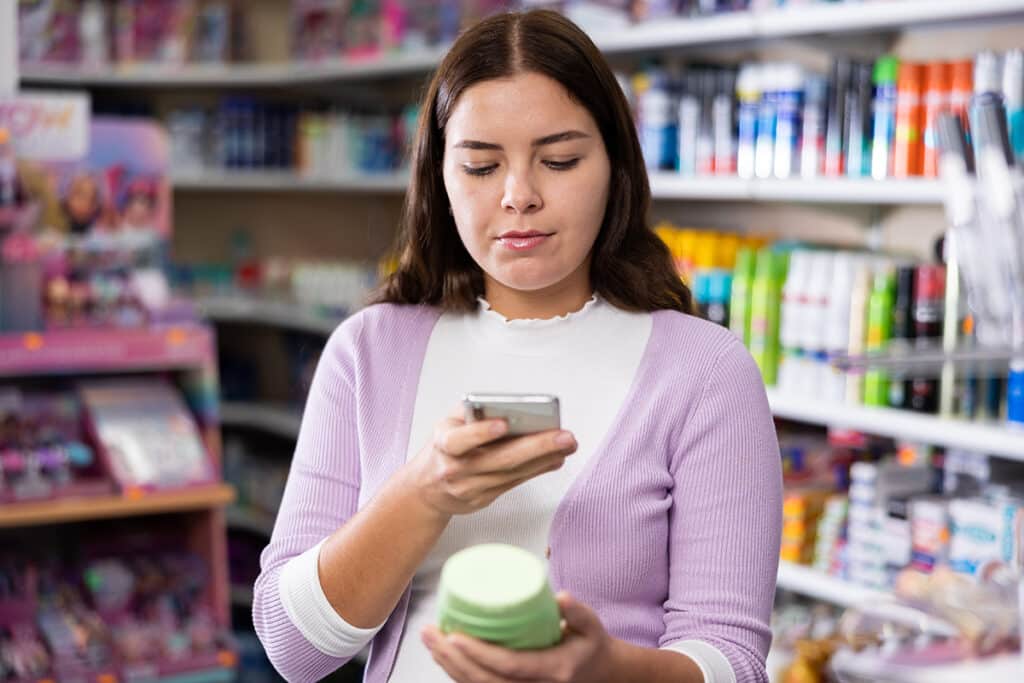
We are on the eve of the transition from 1D code to 2D code. An evolution that will have a particularly significant impact on retail - where different scanners and software will be needed everywhere - but also at every other point of the supply chain. To best help food companies through this transition, Markem-Imaje supports its customers with total solutions. Because for the food industry, there are lots of opportunities with 2D codes.
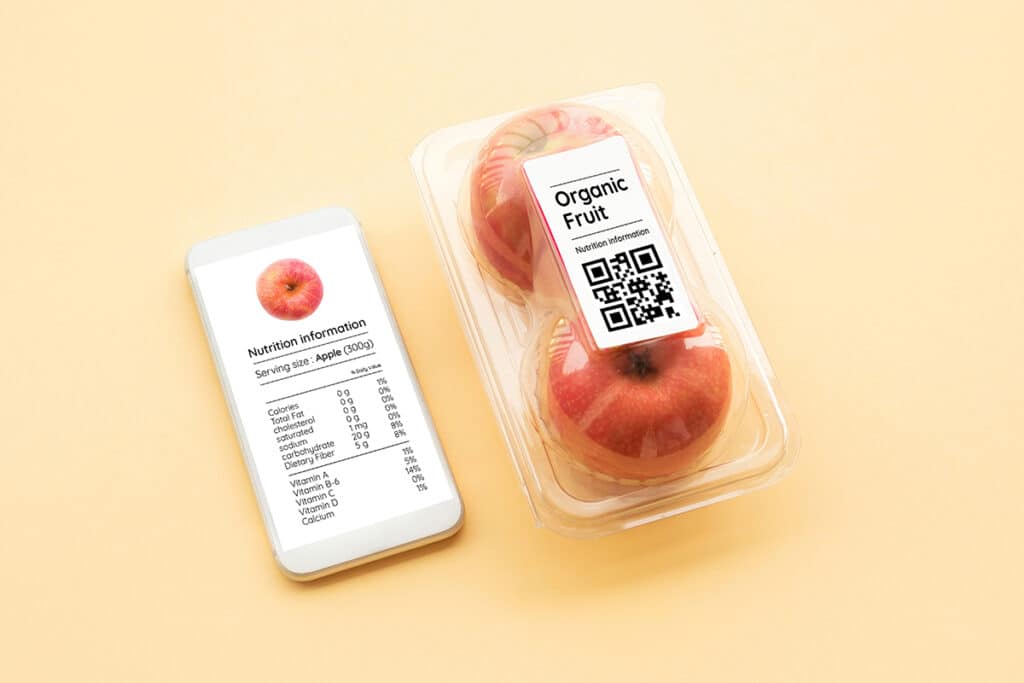
Actually, a 1D code doesn't tell a big story. It tells which EAN number it is about and therefore which product. A 2D code adds a multitude of information to that, in a standardized way within GS1 Digital Link. "We see that data is becoming more and more important. A 2D code can communicate much more data on a much more compact surface. About production - think batch data, lot number, best-before date, ... - but also to build a stronger relationship with the end customer. For example, the 2D code can contain a URL where the story behind the product, from farm to fork, is explained," explains Bob Bols, software solution sales at Markem-Imaje.
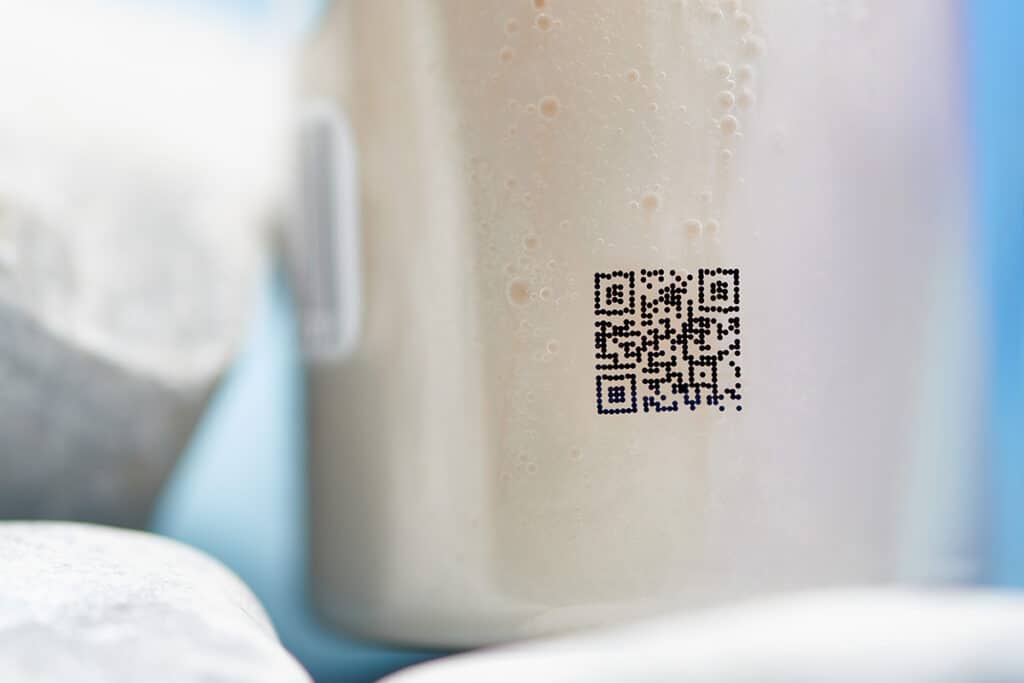
On a technical level, a 2D code will be a step forward for everyone in the chain. "Who hasn't experienced it at the checkout? A product that has to go over the scanner several times because the code just can't be read sufficiently or even turns out to be completely illegible. 2D codes are more versatile in that respect. They can be read from different angles, but any damage to the code can also be compensated for more easily." For food companies, retailers and point-of-sale (POS) outlets, this will boost efficiency especially in terms of traceability and inventory management. "You know what batch each product comes from and what expiration date is attached to it. So you can easily ship the right products first, process them or even automatically calculate a discount if the expiration date is already too close."
Currently, it is mainly the big brands that are already experimenting with 2D codes. "Customer engagement is the biggest driver here. On the basis of promotions, for example, customers are invited to scan the 2D code. There they find, as mentioned, the story behind their purchased product, but also all the nutritional information, data on which allergens are present, recipes to get started with the products, ... Things that are now also on a package, but therefore not always as readable." A second important argument for food companies to get started with GS1 Digital Link is the ability to guarantee the authenticity of the product. "In the pharma and tobacco sectors, serialization is already mandatory, mainly to combat counterfeiting. The principle is now trickling into the world of food as well, especially for high-end products. A 2D code is a perfect tool for this."
The eventual breakthrough of the GS1 Digital Link will eventually have to be accompanied by an evolution in legislation. "Now the legislator requires that, for example, allergens and nutritional values are compulsorily listed on the packaging. Space that could be utilized for marketing purposes by food companies, to put their brand forward. Wine is already an exception to this: wine producers are allowed to take things off the label and put them in a 2D code. So things are already moving, even among retailers. For example, the retail group Tesco in the United Kingdom is already taking the initiative to make GS1 Digital Link mandatory for those who want to land on the shelf."
An evolution, then, that food companies will not escape. Fortunately, they can count on Markem-Imaje to make implementation as smooth as possible. "You need new software and hardware to print 2D codes. Especially those who opt for in-line printing, there will be some adjustment work: designing a new layout for the label, linking to the master data at the customer's site, ... But we have the technology, the people and the experience to manage all that and come up with solutions that require as little human interaction as possible for maximum efficiency," concludes Bols.
Neem dan rechtstreeks contact op met Markem-Imaje NV.
 Contact opnemen
Markem-Imaje today Markem-Imaje is a trusted global manufacturer of product identification and traceability solutions. Markem-Imaje provides a full range of reliable and innovative inkjet, thermal transfer, laser, printing and labeling systems applications. Markem-Imaje offers fully integrated solutions that stand for quality and safety, comply with all legislations and requirements of retailers, thus reducing recalls [...]
Bekijk Bedrijfsprofiel