Platform for the food and beverage industry
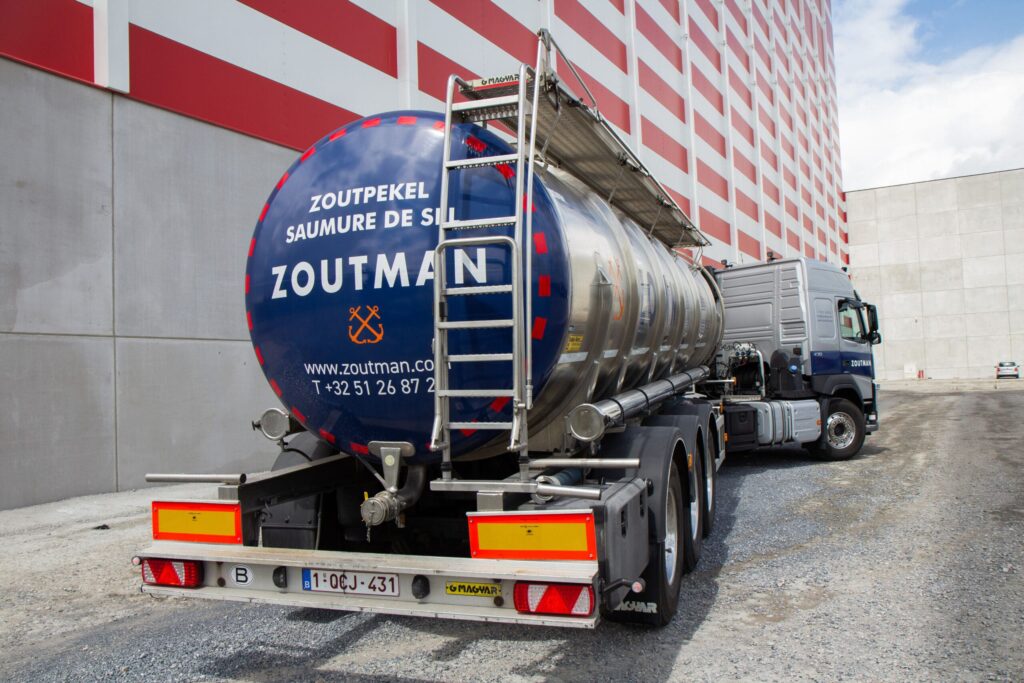
More and more food companies are switching from dry salt to ready-to-use brine. Not just for the sake of precision or efficiency—but mainly because it makes the work on the production floor simply more ergonomic.
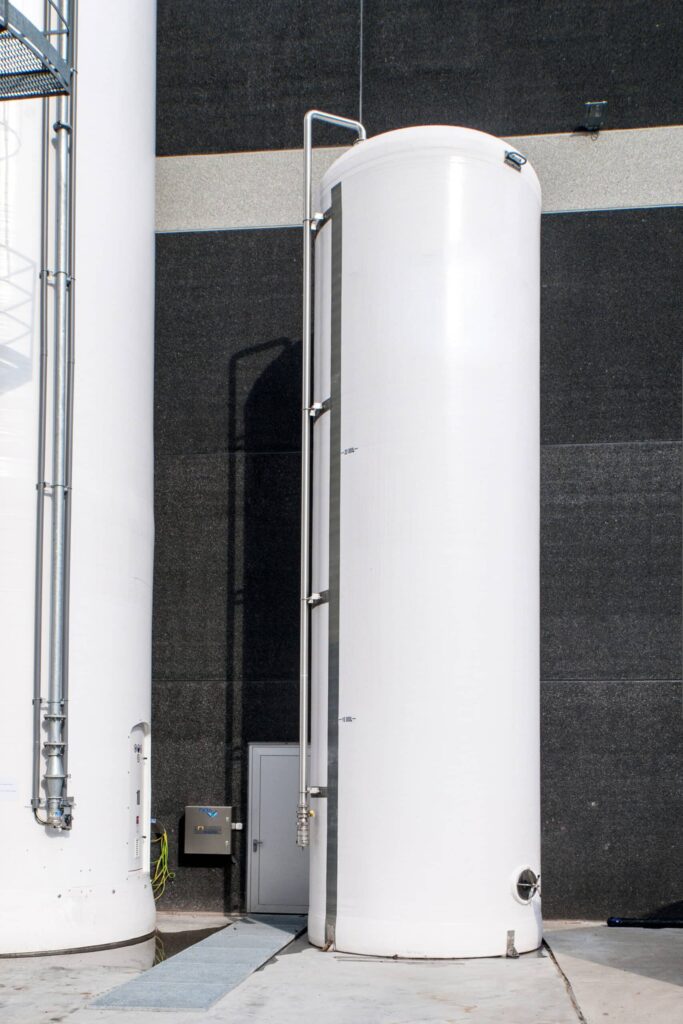
Anyone still working with bagged goods today is familiar with the problem: heavy industrial bags that must be moved, opened, and emptied by hand. This involves physical strain, repetitive motions, and an increased risk of workplace accidents. Even when switching to bulk salt, the work often remains physically demanding. The salt still needs to be processed in-house, often requiring additional equipment and manual intervention. Ready-to-use brine completely breaks that pattern: no bags, no lifting, no manual handling. The brine is delivered directly and stored in a brine tank, ready for use in the production process. The result is a work environment that is not only more efficient but, above all, safer and more pleasant for employees.
Every additional step in a process is a potential source of error. With dry salt, this means: transportation, storage, dosing, and preparing the brine yourself. The latter is crucial. Dissolving salt requires precision—variations in concentration can have a direct impact on the taste, quality, and consistency of the final product. Ready-to-use brine eliminates that uncertainty.

In addition to ergonomics, sustainability is also playing an increasingly important role. In regions such as northern France, companies are assessed based on their own water withdrawal, especially during periods of drought. Here, brine once again makes the difference. When you produce your own brine, you use local water—and that is fully factored into your consumption. With purchased brine, it’s different: the water is already in the product and is therefore not counted as local water withdrawal. For water-intensive sectors, such as the potato industry, this is a strategic advantage that cannot be ignored. In concrete terms, this means:
Paulig has three production facilities in Belgium for Poco Loco and Santa Maria tortilla chips and wraps, tacos, sauces, dips, and dinner kits. With this product range, the international family-owned company ranks among the market leaders in private-label Tex-Mex products. To say that salt is indispensable in the production process is an understatement. From seasoning the dough and the chips to softening the production water: salt is involved in just about every step of the process. With Zoutman, they have a reliable and flexible partner for this essential link in the production chain. “If there’s a problem with the salt, our entire production comes to a standstill,” says Operations Director Bruno Noppe, explaining its importance. On Zoutman’s recommendation, Paulig switched to salt brine for the dough used in its chips and tortillas. The brine is delivered ready-to-use and stored in a brine tank. Employees no longer have to measure out the salt, and the same product is fed into the water softeners. In other words, yet another simplification of the production process. With its latest innovation—the telemetry system—the company is taking things a step further. “Using a pressure sensor on the brine tank, Zoutman can monitor the brine level in our tank remotely,” says a Paulig representative. “When the level in our brine tank is running low, they send a notification so we can coordinate the next delivery. This means we no longer have to monitor it ourselves and never run out of brine. For us, that’s one less thing to worry about—and a major plus in our partnership.”
Interested? Scan this code to request a brochure featuring case studies and all the technical information on ready-to-use brine.
Neem dan rechtstreeks contact op met ZOUTMAN.
 Contact opnemen
ZOUTMAN is the global leader in high-quality table salt. ZOUTMAN uses exclusively sea salt, which is by far the most environmentally friendly type of salt. When extracting salt from the sea, CO2 emissions are up to 31 times lower than for salt extracted from mines, such as rock salt and vacuum salt. The company aims to achieve a sustainable transition in […]
Bekijk Bedrijfsprofiel