
Platform for the food and beverage industry
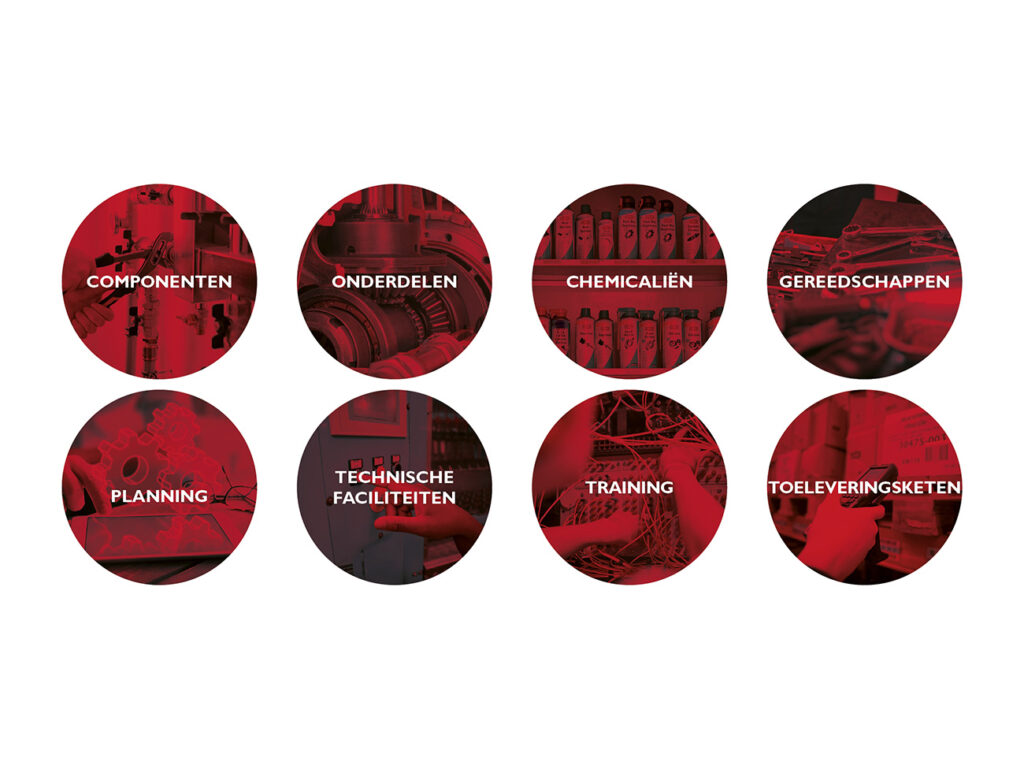
Conversations about "Maintenance, Repair and Overhaul" (MRO) are usually about engines, chains and tools, but these aspects concern only one part of the maintenance process. Modern professional engineers in the food and beverage industry also deal with compliance with safety regulations, documented risk minimization and transparency.
High-quality components and equipment for capital investment depend on high-quality maintenance chemicals to meet performance goals, obsolete equipment is kept running while investment requests must be evaluated and approved. In uncertain times, the entire maintenance puzzle must be considered and trusted brands, such as CRC Industries, must be chosen.
A typical MRO operation involves many aspects, all of which are equally important to ensure a reliable, productive and efficiently planned maintenance cycle. Whether it is "invisible issues" such as:
Or physical things:
When a component is missing, substandard or overlooked, the trinity of "reliability, efficiency, productivity" is often compromised resulting in higher maintenance costs.
frequency or interference.

When it comes to the "chemical" aspect of a maintenance process, the emphasis is often on lubrication, and often a little grease or some oil refill is enough to complete the work order. But when more extensive maintenance is required, a component or part of the equipment is disassembled, inspected and replaced to determine if it is the cause of problems or will potentially cause problems. This reveals the true extent of the many options in chemical maintenance agents: from cleaners/degreasers and lubricants and anti-corrosion agents to metal
machining, welding, wipes and more.
Cleaning and degreasing agents are designed for the critical first stage of the maintenance process. All old lubricants or contaminants are removed, allowing the clean surfaces to be inspected for wear and preventing new contaminants during re-lubrication and reassembly. The technology behind cleaning chemicals is complex: skillful mixing of raw materials creates cleaning properties: rapid evaporation, foaming action, grease removal, dry deposit removal, material compatibility, and so on. Normally, solvent-based cleaners are better at removing greases and heavy/light oils; water-based products can remove general contaminants or are suitable for use on delicate materials. A trusted, established brand (such as CRC Industries) is often the first choice of engineers because of its expertise and technical knowledge.
Safety is a primary concern for food producers. Contamination can lead to costly product recalls, production stoppages and even investigations by regulatory agencies. In addition to the loss of time and money, contamination problems can severely damage a brand's reputation. In the fight against food contamination, maintenance solutions that are suitable for consumption or allowed to come into contact with food play a crucial role. In food processing equipment, lubricants are an essential component, but they can pose a potential risk of cross-contamination with food. Incidental contact with food can never be completely ruled out. Therefore, it is important to use rigorously rated lubricants such as NSF-registered and risk-assessed products. All CRC lubricants with H1 and 3H NSF classification have the spray head with CRC Perma-Lock®. With prevention in mind, the Perma-Lock® is a one-piece, two-way spray head with a built-in straw that snaps into place. 'Prevention: Not Detection' ensures demonstrable audit compliance. The CRC series 'Food Processing Safe' (FPS) provides engineers with high quality maintenance solutions that add value and minimize risk. This comprehensive range is available through authorized distribution partners. It allows buyers to deliver efficiently while saving on costs without compromising on high quality and top performance.