
[00:02] Introduction to the podcast and episode
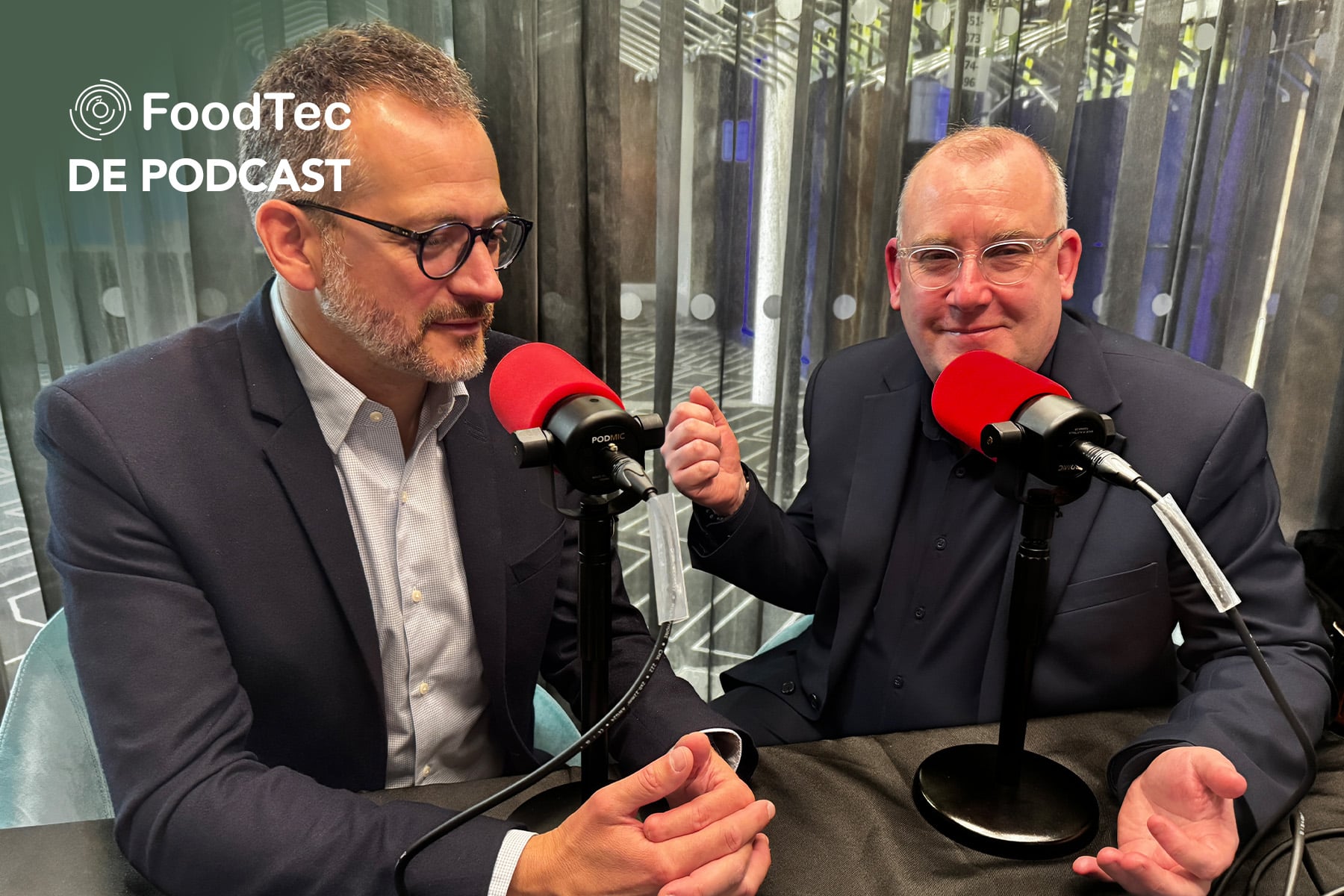
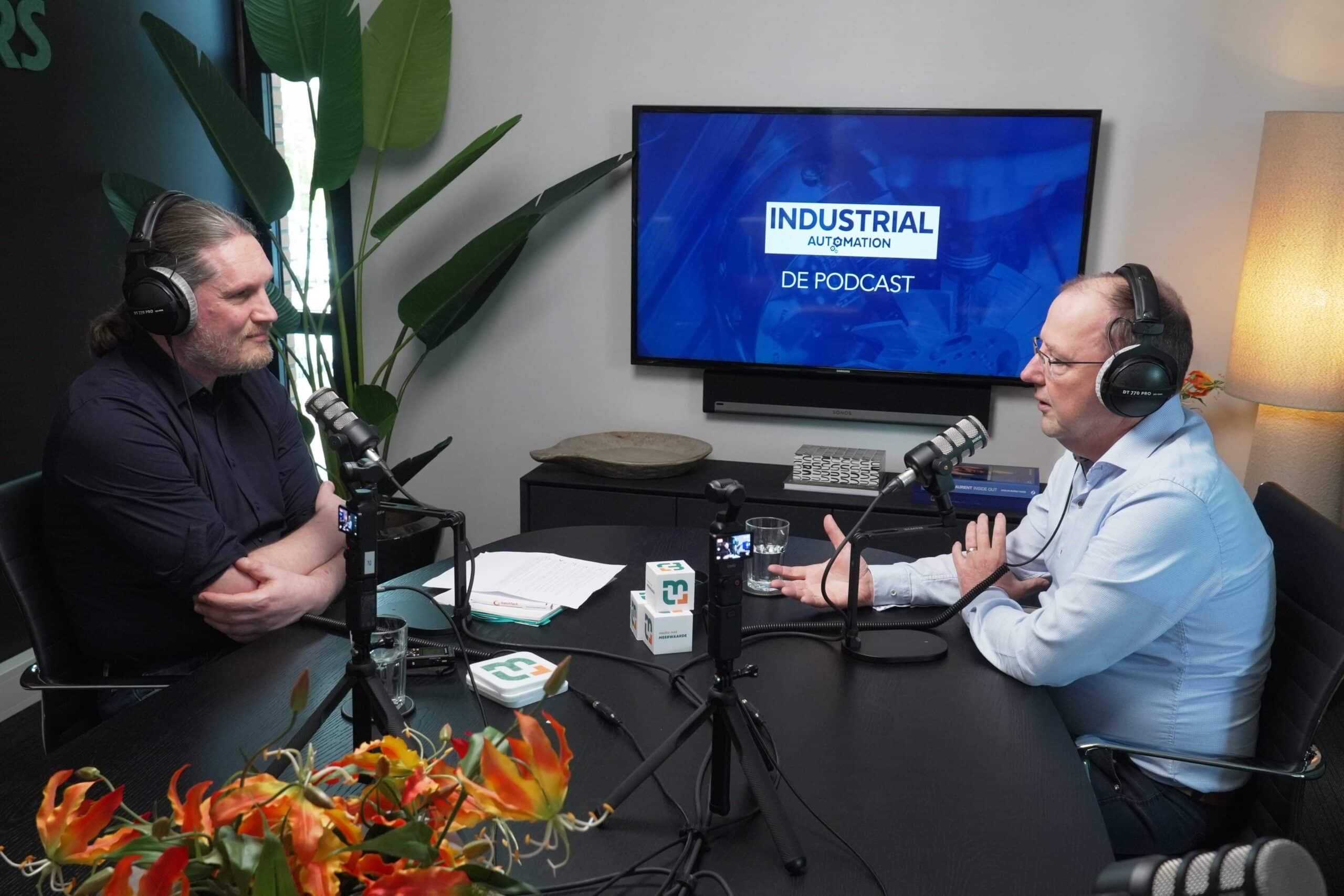
Alexander Pil: Welcome to the Industrial Automation Podcast. The place where technology, innovation and industry come together. Where we talk about everything going on in the world of manufacturing and process automation. From robotics and smart software to connected machines and digitalization on the shop floor. Because industrial automation today is the engine behind more efficient, smarter and sustainable production processes. In this podcast, we talk to experts, engineers and entrepreneurs who are building the factory of the future every day. No theoretical stories, but insights from practice, concrete cases and ideas that you can use immediately. Whether you are working on motion control, IT-OT integration, AI or smart production lines. Here you will discover what is changing, what is possible and how you can keep accelerating. In this episode, we talk to Apex Dynamics. My name is Alexander Pil and I'm sitting at the table with Thom van Oss. Maybe it would be good Thom to first introduce your company. What do you do and who are you?
[01:08] Introduction Apex Dynamics
Thom van Oss: It is possible. My name is Thom van Oss, owner and director of Apex Dynamics BV. Apex Dynamics is a manufacturer of mechanical drive components. You have to think of gearboxes, planetary, bevel, hypoid. But also pinions and rack and recently clutches and lubrication systems. Our factory is in Taiwan. Everything is manufactured there. And we as Apex Dynamics BV, make sure that it is sold and delivered in the Benelux.
[01:43] Question about gearboxes
Alexander Pill: Okay, well you say gearboxes, that won't sound immediately familiar to all listeners. What do you need a gearbox for?
[01:51] Operation and function of gearboxes
Thom van Oss: You need those for a lot of applications. A gearbox is also sometimes called a gearbox or reduction gearbox. Well there's already part of the functionality of the product in there. A gearbox slows down, it reduces the speed of the motor. That's one of the most important features, but perhaps even more important is that with the gear ratio that you have a gearbox slowing down a motor, so call it 10 to 1, it also thereby increases the force what we call the torque of the output shaft. So if you apply a motor with gearbox of 10 to 1 that means that output shaft becomes 10 times stronger than without gearbox. So with that you can make a motor much stronger. Our gearboxes are very often used on servo motor applications. Servomotors have the characteristic that they can come up to speed very quickly but also immediately deliver the torque that is specified at each speed. Standard electric motors you have to bring them up to speed with an inverter and at the beginning they don't deliver the torque you actually need. The servo motor does, but even then very often the servo motor can't deliver the torque that the application needs. And if you put a gearbox with a gear ratio of 10 to 1, 100 to 1, whatever you need, then the servo shaft can deliver the torque you need. And another even more important aspect for a function of a gearbox, that is inertia ratio. You can use a gearbox to balance the inertia, so that, for example, a robotic arm does exactly what it needs to do and doesn't suffer from gravity, the mass being put into motion, that it's also stopped again in time. And always compare it to a caravan behind a car. If you have a light car and a heavy caravan you can just go up the mountain, the moment you go down the mountain the caravan overtakes the car. You don't want that. Well you put a gearbox between that then it makes sure the caravan stays nicely behind the car.
[04:17] Visibility of components
Alexander Pill: I can so imagine it's components that are how shall I say almost hidden in such a system, not everyone will see the gearbox right away.
[04:28] Hidden but essential component
Thom van Oss: No that's right. It's actually the extension of the engine. So if nicely neatly assembled then it's actually not noticeable except that the overall like such a piece gets longer. But no, it is indeed a, you say that well, a hidden component. Perhaps a necessary evil, but a lot of applications need a little more power than the motor can provide.
[04:53] 20 years of Apex Dynamics
Alexander Pil: This year Apex Dynamics Netherlands exists 20 years. You have been the distributor in the Netherlands for 20 years. Can you tell, looking back to those 20 years ago, how you guys conquered that market? Because you were totally the new kid on the block. How did you penetrate the market?
[05:21] Market introduction and positioning
Thom van Oss: Yes, that was a challenge. We noticed that there was a need for healthy competition in planetary gearboxes. The company I was working for at the time already sold gearboxes, but we were really looking for our own brand and found it in Apex Dynamics in Taiwan. That gave us an opportunity 20 years ago to build a separate company, Apex Dynamics BV, where we would only sell the products of the factory of Apex in Taiwan. So you end up with basically an existing product with a new brand in an existing brand market. That is difficult, you have to penetrate the market.
[06:18] Competition and positioning
Alexander Pill: That wasn't easy in the beginning. Did you have to compete with German brands or other brands?
[06:25] Strategy and collaboration
Thom van Oss: Yes, mainly German brands. And so yes, we came up with an Asian product, a Taiwanese product. By the way, Taiwan already had a very good name when it came to quality back then, so that helped us a little bit. Yes, we really had to start proving ourselves and we had to start opening doors. With an unfamiliar company name, that's not easy. If we were at the front door of “we are from Apex Dynamics,” the door actually barely opened, if at all. So we looked for a strategy that helped us to do get those doors open. For us, a very logical one was that our product always comes on a servomotor brand. And those were often very big names that the doors did open for. So we started to seek cooperation with servo motor brands. It was the servo motor manufacturers themselves if they had representation in the Benelux or distributors of servo motor brands that did not have their own branch here. That didn't go smoothly right away. You can't really expect that of course. No, we had to prove ourselves. Is the product good, can you deliver on time, is there continuity? Can you deliver it today, but can you also deliver it next week, next year and ten years from now? And actually the most important aspect of all was quality. And yes, then it's just going to be trying it out and convincing people: take our product once, try it out and see if you like it.
[08:06] Distinguishing feature: speed
Thom van Oss: Then what is the advantage? Because let's be very honest, our competitors also make very good products. On the basis of quality we could differentiate ourselves, but the quality of the other brands were and still are very good. So we had to find another differentiator. And we found that in speed. And speed is what is in our genes by now and what manifests itself in everything. Not only speed of our gearboxes, because they also run very fast, but especially speed of delivery, so short delivery times. And very importantly, speed of response. A customer, if he is designing a machine or if he has a question, he is working on it at that moment.
[08:45] Importance of rapid response
Alexander Pill: And does it want an answer even then?
[08:46] Quick quotes and service
Thom van Oss: Then it seems to me that at that moment you also want to have the answer, so that they can move on and that they don't have to wait one, two, three weeks before they have a technical solution or before they have an offer at all, let alone a product. Well, and speed is something in which we have always been able to distinguish ourselves. So yes, actually our rule is that a quotation must be out within an hour, including drawings and everything else.
[09:11] Automation of processes
Alexander Pill: So how much work is that to make such an offer? Is that already automated in part?
[09:19] Far-reaching automation and supply chain
Thom van Oss: That's exactly why we succeed. We are highly automated when it comes to our business processes. So that means that in the fastest case we take about five minutes from request to billing. That can be very fast. Importantly, our factory in Taiwan also always produces in stock. Robin Cheng, the owner of Apex Dynamics in Taiwan, has always said: someone who sells Apex Dynamics' product must keep stock himself. So we have quite a stock in Helmond from which we can draw, but in Taiwan at the factory there there is just about any product you can think of in any number in stock. Maybe not complete yet, then they have to put it together, but within 24 hours they have the product ready and it can be transported. That's a little thing, it has to come from Taiwan to the Netherlands, but we can basically have everything on transport within a week. Well take three, four, five days transport time with air freight, so within two weeks we can just deliver everything we have in our portfolio. That's over 22 different designs in an almost infinite number of build sizes, transfer ratios, shaft designs, accuracies, you name it. And what I say, every item we have, we can just deliver within two weeks. And that's pretty unique.
[10:49] Stock and European cooperation
Alexander Pil: And how much can you deliver right from Helmond already? You have stock there as well.
[10:56] Stock strategy and European coverage
Thom van Oss: We already have quite a bit of stock there. After 20 years, we know with our statistics what the customers in the Benelux need. We also have a number of regular customers who buy certain products that we know we have in stock anyway. But because of the enormous variety of possibilities and designs it is almost impossible to always have exactly the right product in Helmond. Besides Apex Dynamics BV in the Benelux there are 13 other Apex companies in Europe. These are all independent companies who all run their Apex Dynamics for own risk but also profit. We have a lot of contact with each other. We have also set up a system with each other that we can see what is elsewhere in Europe. So we can already look in thirteen other warehouses to see if it is there. Well, if it is not there then it will have to come from Taiwan, but then it will also be here quickly.
[11:58] Breakthrough in the market
Alexander Pill: Just going back to those 20 years ago, that market entrance search. Can you remember the first time you thought, yes, we're really going to get there now?
[12:14] First moment of success and growth
Thom van Oss: Yes, it always starts with the first sheep over the dam. And fortunately we had found a party, a good brand, who saw the possibilities, who really saw a win-win situation. And they told our representatives: take the Apex brochure with you, because they are with the customer anyway. And if they indeed sold a servo application, in what we know about 60 percent of every servo shaft comes a planetary gearbox, so in those cases you also take the Apex Dynamics cabinet. Yes, and then it's just literally one sheep over the dam, then more will follow. The market got familiar with that: there is an independent gearbox supplier that is not really married to any one brand and we can take those products. So with that we not only provide added value more, but also a total solution with the customer. Because that's the most important thing. The application does not end with the servomotor, so in a lot of cases that also includes a gearbox.
[13:23] Collaboration and assembly
Alexander Pill: They could also offer those together so actually to their customers.
Thom van Oss: Yes, that's why we can also do it with a relatively small team in Helmond. So we deliver to our partners, as we call them, and they deliver a total package, so whole engine drive including gearbox to the customer. So we also build it together in Helmond. It also happens that the customer says: we want the gearbox built to the motor. We do that in Helmond. Then the motor supplier sends the motor to Helmond, we build the gearbox on it and we deliver the complete set to the address given.
[14:06] Assembly and precision
Alexander Pill: So you guys are really standing there with Allen wrenches and screwdrivers in Helmond, too?
Thom van Oss: That's a very good one you say that, Allen wrenches, no, we use torque wrenches. That's very important, because very often that goes wrong with mounting a gearbox. Everything does have to be tightened or mounted with the correct torque. Because what you don't want is for an axle to slip or just what. So an Allen wrench won't get you there.
[14:35] Production in Taiwan
Alexander Pill: You've mentioned Taiwan a couple of times. You told me just before the interview that you had been there recently. It's quite an impressive factory there huh, if I understand that correctly.
[14:50] Factories and production process
Thom van Oss: That's right. It's not one factory meanwhile, it's three. But yes, that is absolutely correct. That was also one of the reasons why we chose Apex Dynamics at the time. When we went there the first time, we were amazed at how neat everything looked, which is not always evident in those regions. But also especially the high quality thinking of the people in the factory, that appealed to us enormously and that is also the reason why we have chosen Apex Dynamics as our brand in the Benelux. Robin Cheng is indeed the founder, president. The CEO is just below, but Robin Cheng is the owner and founder and I have a high opinion of him. When I met him the first time, he exuded a passion and a vision that I said: he is going to go far and I want to be part of that. And yes, indeed, the factory is very impressive. They currently have a capacity of more than 50,000 gearboxes per month. That's quite a lot. And I was just saying, they have three factories. The second factory that has opened is specifically for rack and pinion applications. And the third factory is still a question mark. That one is still mostly empty. They have already started filling it with machines, though. The machines Apex uses are really all high-end machines. Robin has always said: if I want to compete in the world market I have to produce with the best machines. So all the production machines in our factory are of German, Swiss or Japanese manufacture and can compete with the best in the world. It's tremendously impressive to see how streamlined everything goes there. You can see the rod material coming into the bottom left of the factory, so to speak, and on the top right the complete products come in ready to be stocked. They also make everything themselves except the seals, bearings and bolts. All the fabrication parts of the gearboxes, rack and pinions are completely made in the factory. All surface treatments, all hardening methods, they have everything in-house to make the complete product.
[17:32] Automation and quality control
Alexander Pill: To what extent is that still manual or machine work? How many people are still walking around?
Thom van Oss: I thought there are about 700 people working in the plant right now. Some of it is manual work, but everything that can be automated is automated. Robin also started making XYZ robots. So he is well versed in the world of automation and how to automate production. He also uses many of his own robots in the factory. They are all CNC machines. Placing the workpiece and starting the program, but then comes the most important thing: checking, measuring, measuring, measuring. An awful lot of measurements are taken to check that every piece that comes out of the machine meets the requirements and tolerances needed to produce low-backlash gearboxes.
[18:41] Geopolitics and risk
Alexander Pill: Taiwan is also in the news geopolitically. Something could start happening. We all hope not, of course. But I can imagine that for you here as Apex Netherlands that could still be quite a risk. If something happens, you don't know what. How do you look at that?
[19:13] Impact of geopolitical situation
Thom van Oss: Yes, we made the choice to choose for a brand, so to be able and allowed to deliver in the name of the brand. With that comes a risk that if something happens to the factory or the brand, then you have a problem. Right now, certainly geopolitically, that is a thing. You read that almost daily in the newspaper. Recently I saw some great series on television about the situation in Taiwan. It is certainly threatening. Many of my customers also ask: what happens if Apex Dynamics, the factory in Taiwan, can no longer deliver? Yes, then I as Apex Dynamics BV will have a problem. But I honestly think that gearboxes are still the smallest problem in the world at that time. As long as 60 percent of all microelectronics still comes from Taiwan, with factories like TSMC and Micron there, and which are huge, because TSMC happens to be a good neighbor of Apex Dynamics' factory, then all over the world at that point there will be no electronics left. Of course they are working hard to have alternatives, but they are so far ahead that if something happens there now, we all have a mega big problem. Then gearboxes are small beer. What I am saying, there are alternatives and they may not be from Apex, but with those we can possibly help the customer.
[20:57] Logistics and transportation challenges
Alexander Pill: Rather not, of course.
Thom van Oss: No, let's hope none of that happens. But yes, quite the situation in the world right now. I flew back from Taiwan just last week and I was wondering how the plane would fly. But apparently, there is still a route between Russia and the Middle East that allows for safe flights up and down.
Alexander Pill: You have to, because a lot of that stuff is still flying you over, too.
Thom van Oss: True, we have weekly air freight shipments. That's a problem right now, though. There are flights, but all the Middle East flights with stopovers are all cancelled. So there is a huge scarcity of air cargo capacity right now. That not only drives up the price, but the most important thing for us is to do what we promise: deliver within two weeks. And if an air freight is cancelled, that's not easy. But I must say, so far our service providers are still very creative and we still manage to get the stuff here on time every week.
[22:13] From component supplier to engineering partner
Alexander Pil: In the past 20 years you have also changed in terms of your character as a company. Where at first you mainly supplied components, you are increasingly becoming an engineering partner. Can you tell us how that turned out and what you all do now?
[22:27] Evolution to engineering and consulting
Thom van Oss: I can do that. If you only supply a planetary gearbox, which is where it all started, or low backlash gearboxes at all, then you are a component supplier. Of course, you have to give advice to customers on which one is best to use. Pay attention to overload, torque, overshoot, you name it all. But then you're essentially a component supplier. A lot of our customers, especially as we work with partners, sometimes know what they need even better than we know ourselves. But with the advent of gear racks and pinions in our package, that did change. Just to clarify, a gear rack makes a rotational motion. With a pinion and rack, you can turn a rotary motion into a linear motion, a left-right motion. Which is needed in a lot of machines and applications. But then another aspect comes into play, and that is engineering. Then it becomes a lot harder for a lot of parties to start calculating an application, because that involves a different force field.
[23:53] Complexity of applications and component selection
Alexander Pill: I can so imagine that those components also affect each other, so you have to find the right combination.
Thom van Oss: Exactly that. You have to find the right combination of gear, pinion and rack. And there is no exact science to that. We did develop a number of tools. We have a design tool on our website, we have Dynamics on our website where customers can already enter a lot of parameters and variables of an application themselves and then they already get a proposal. But even then it is important to look just a little bit further. That is what we very often do for our customers these days. We ask the customer to come up with data as soon as possible. Not order first and then ask afterwards: it doesn't work well, why not? No, first ask when designing the machine: we want to move so many kilos over that distance at that speed, which components can we best use there?
[24:59] Use of tools and validation
Alexander Pill: Is that indeed true or could it be even better?
Thom van Oss: Particularly Dynamics. A whole report comes out of there in which all specifications are given, but also all calculations are shown. And even very clearly shows whether something is red or green. Green is right and red is wrong. Then you know you're somewhere outside the bandwidth. That doesn't always have to be a problem, but you have to know. Because then you can take that into account in the application. A lot of our products are used outside spec. But by limiting a motor current or taking accelerations and decelerations or required torques into account, you can still apply a product that is actually under-dimensioned. What we all very often do is oversize, as safely as possible. But that is also more expensive. In our case, that means a larger gearbox and heavier components. That is not always desirable, while you can often get by with a smaller component, provided you apply it properly.
[26:15] Importance of knowledge and experience
Thom van Oss: That is the knowledge we have built up in those 20 years and also fortunately managed to keep. There are five of us, but most of us have been working at Apex Dynamics for a long time. So knowledge is still present. That is an important aspect: having and securing knowledge. That is also something we are working hard on. That is actually the piece of engineering that we do more and more, without being a constructor or a machine builder. Everyone has to stick to their last. We supply the components, but we can think along and help calculate whether those components come into their own in the application. We do not sit in the machine builder's chair, but next to him.
[27:28] Future of industry
Alexander Pill: How do you see the future of your industry, of your customer and the market?
Thom van Oss: If you want to look at the future, you also have to look at the past first. Twenty years ago, people said that a gearbox was a finite product. That it would be overtaken by digitalization, new motors, direct drive. But the opposite turns out to be true. There is more and more automation and robotization. Wherever there is precise motion, a low-backlash gearbox is still an important component. Look at humanoid robots. Those have an average of forty gearboxes in them. That's exactly what we do. So I still see a lot of applications in the future. The technology is old, but there has been tremendous development. The products have only gotten better.
[29:19] Innovation and future applications
Alexander Pill: What did you see in Taiwan last week that you think: I want to bring that to market soon?
Thom van Oss: I'm not allowed to say that yet, but there is more to come. We started with six series, now we have 92. Development continues. It's in the corner of cobots and humanoid robots. There are opportunities there. The question is whether they are in Europe, because that market is mainly in China and America. Personally, I am also interested in applications in healthcare, for example for paraplegic patients. Exoskeletons are developing rapidly. They used to be heavy devices, now they are suits you put on. These are great developments that I would like to contribute to.
[31:09] Digitization and AI in business processes
Thom van Oss: We focus not only on products, but also on process optimization. At a certain point you think that automation ends, but with AI, new possibilities come. Not only for processes, but also for marketing. The way people search has changed. People used to search through Google, now they type something in and get an answer right away. And often also where they can buy it. Then it's up to us to be among them.
[32:28] AI and new commercial opportunities
Alexander Pill: And how is that going now? Have you had any success with that?
Thom van Oss: Yes, it starts with awareness. My son stepped into the business and woke us up to that. We are busy with new tools and opportunities. Both marketing and product selection. We are even developing an API that will be integrated with our website, so that with a simple question you get the right solution right away.
[33:26] Future of product selection
Alexander Pill: So through a bot you will soon be able to select the right gearbox?
Thom van Oss: That would be nice. That you say: I have a machine that needs to do this, and that you immediately get advice on motor, gearbox, rack, pinion, clutch and lubrication system. It will never be quite that simple, but you can save a lot of time. We have already developed a quick finder that helps customers choose direction. That's where it's going: speed and relief.
[34:52] Closing
Alexander Pill: And getting as high a speed as possible actually.
Thom van Oss: Yes, our slogan was not for nothing: we run faster. So we need to step it up a notch, literally and figuratively.
Alexander Pill: Yes, exactly. Thank you for the conversation Thom.
Thom van Oss: Thank you for allowing me to attend. Very nice.