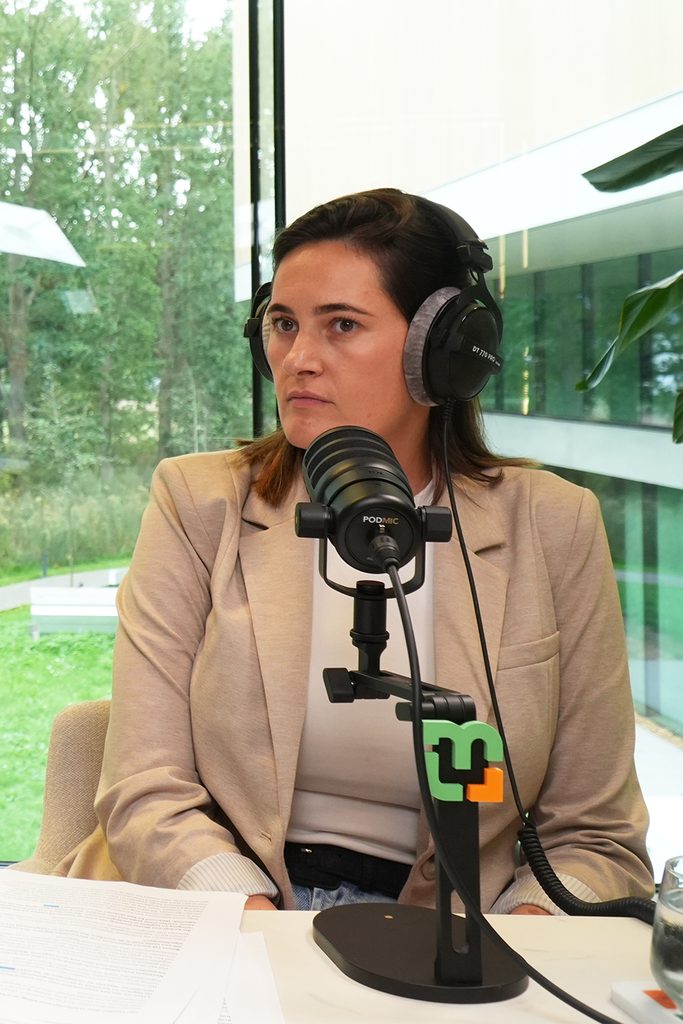
[00:02] Introduction – Cleaning as a Strategic Factor in the Food Industry
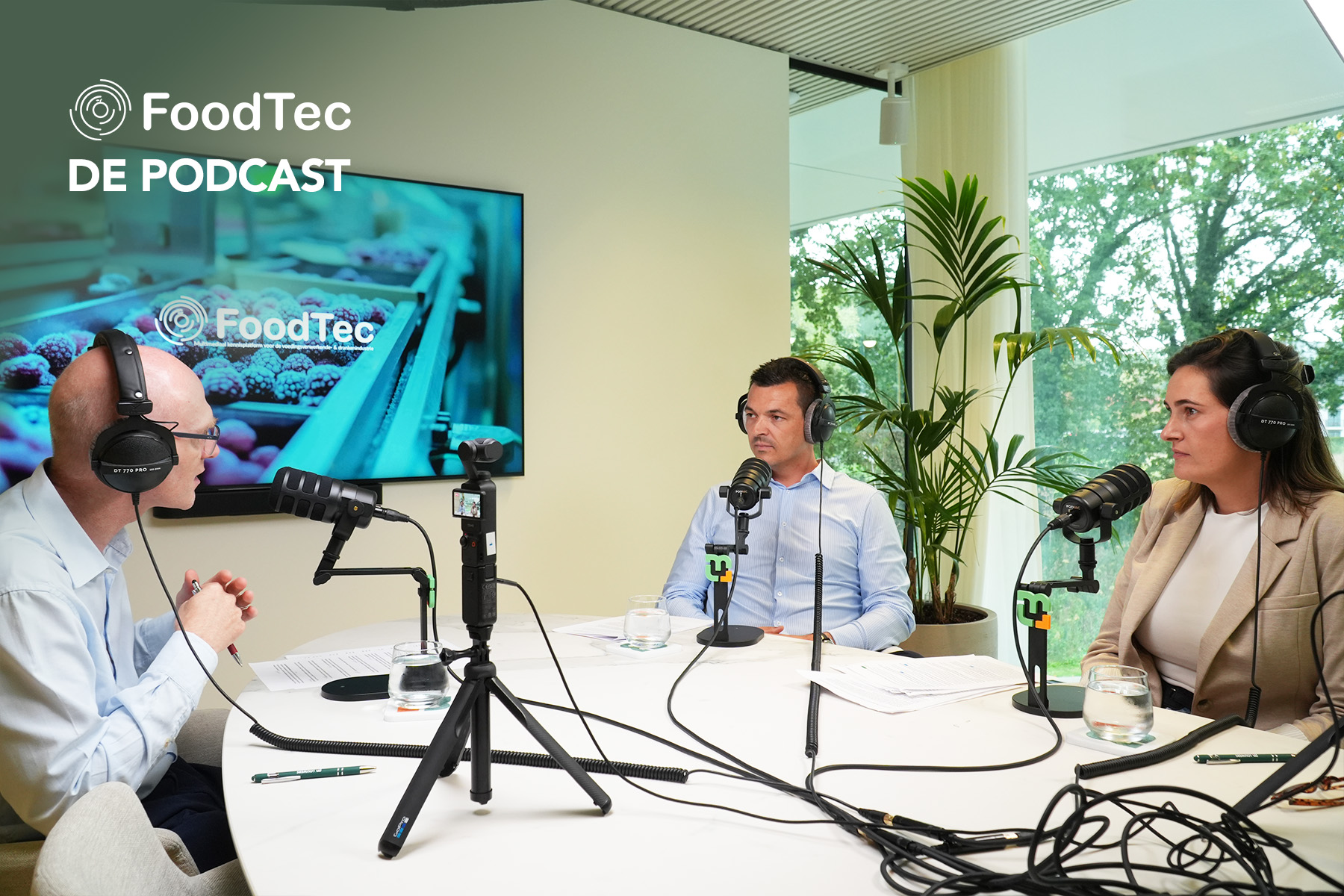
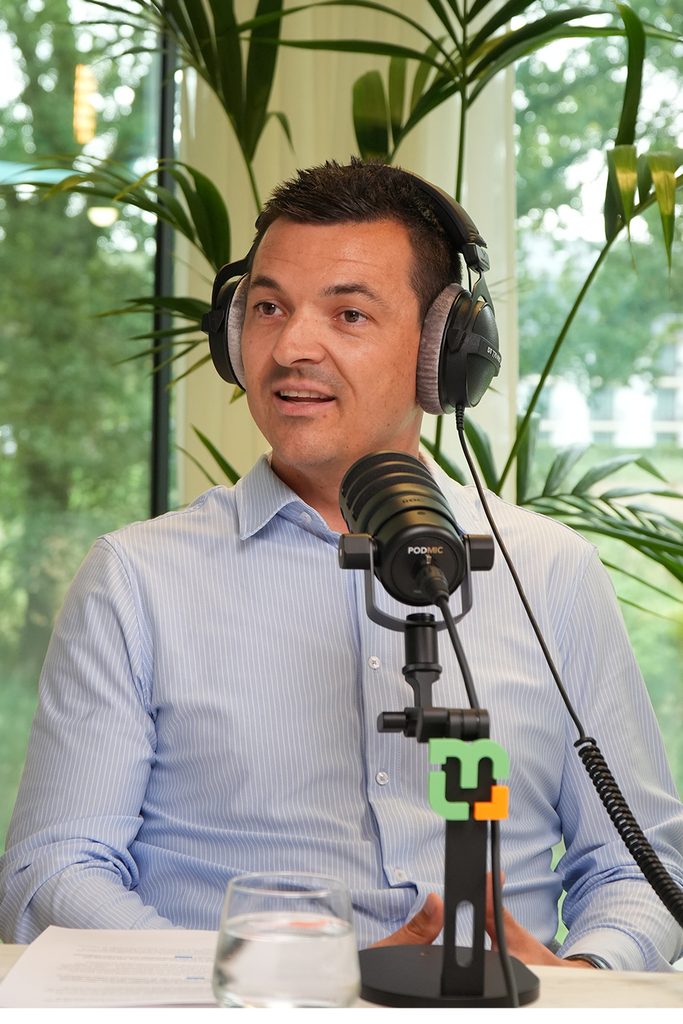
Björn Crul: Hello, listeners, and welcome to a new episode of the FoodTec podcast. This time, we’re focusing on cleaning. After all, it has a major impact on the food industry. It directly affects product quality, food safety, operational costs, and sustainability. So we’re not talking about cleaning at the end of the workday, but rather about cleaning as a strategic factor that’s an integral part of the production process. The family-owned company BOONS FIS specializes in industrial cleaning equipment and hygiene solutions. My guests today are Liesbeth and Simon Boons, who are continuing to expand the family business as the second generation. Welcome to our studio, both of you. Liesbeth Boons: Thank you.
[00:42] The Evolution of Cleaning and Hygiene in the Food Industry
Björn Crul: Liesbeth, let me start with you. BOONS FIS—you’re a well-known name in the industry with a wealth of experience. We’ve seen that our industry has already made significant strides in automation, productivity, and food safety. Does that also hold true in the area of cleaning and hygiene?
Liesbeth Boons: Yes, definitely. Ten to fifteen years ago, we saw that everything was simply done with a single application—namely, a high-pressure washer—and that was it. Over the last ten to fifteen years, we’ve seen a variety of applications emerge, such as medium-pressure and low-pressure systems, foam, disinfection applications, and—looking toward the future—all the possibilities involving data, automation, and AI. We’ve made a lot of progress. But we still see a gap between the industry leaders and the companies that still have some catching up to do. So there are still quite a few opportunities there. I always get the impression that, for example, production lines and the like are very often highly automated and that a great deal of attention is paid to that, but that cleaning sometimes still lags behind a little, so to speak.
[01:50] Integrating Cleaning into the Production Process
Björn Crul: Yes, because you’re arguing that this cleaning process should actually be an integrated part of the entire production process. Why is that so important?
Liesbeth Boons: A production line that can operate technically but cannot be cleaned properly and on time is not really a good production line or a well-designed line. Cleaning will determine the available production time, product changeovers, and the risk of contamination. So it’s very important that these issues are addressed from the very beginning.
[02:20] Risks When Cleaning Is Separate from Production
Björn Crul: Yes, we’re talking about contamination. What are actually the biggest risks in food processing facilities where cleaning is still separate from production?
Liesbeth Boons: That’s a very broad issue. It can involve unclear responsibilities—who does what?—insufficient time allocated in the schedule for cleaning, hard-to-reach areas that can’t be cleaned, or a cleaning system that isn’t suited to the actual level of dirt. And then a cleaning crew is expected to solve that problem, but by then it’s often already too late. If cleaning had been factored into the design from the start of the process, more checkmarks could have been added regarding cleaning.
[03:05] From Reactive Cleaning to Proactive Process Control
Björn Crul: Yes, what we really need to move toward is shifting from reactive cleaning to proactive process control. What factors actually encourage companies to work with you to move in that direction?
Liesbeth Boons: Yes, when they aim to be more proactive, there’s often a specific reason for it. A recurring issue that keeps coming up, long cleaning times, staff shortages, a product change that takes a lot of time, or a new production line that needs to be installed. And an additional motivator is when, for example, operations and quality teams simultaneously identify that problem or challenge. That often serves as a catalyst for shifting toward a more proactive mindset.
[03:50] Regulations, traceability, and food safety standards
Björn Crul: Yes, I assume that the importance of regulations and traceability also plays a role. Standards such as BRCGS and IFS Food require companies to demonstrate and document their food safety efforts. Does that have an impact on the questions customers ask?
Liesbeth Boons: Yes, I actually get questions about that every day. And they can range from very minor practical matters to larger issues. When I think of small practical questions, they’re things like: How do we lock up our chemicals? Can you help us with calibration? Because we also need to be able to demonstrate compliance. But there are also the bigger issues: How can we ensure that our 100% procedure is properly validated? Those are the bigger issues. And actually, we use those questions as a starting point to improve our equipment and processes and to help our customers in that regard.
[04:43] The difference between new construction and renovation projects
Björn Crul: Simon, you help both companies that are building a completely new factory and others that are renovating or expanding a production line. Is there actually a big difference in the way you approach such projects?
Simon Boons: Yes, definitely. So we do work on both new construction projects and for existing clients who are making changes or renovating their spaces. And of course, with new construction, we start with a blank slate and strive for the best possible, most ideal outcome. Very often, companies building a new facility already have years of experience. They know from their previous building what works and what doesn’t. And they incorporate all of that into the new construction.
Björn Crul: I suppose that's actually the easiest way to work.
Simon Boons: That is indeed the easiest way. And depending on how early we’re brought into a project—if it’s really very early on—we sometimes still have the ability to make certain adjustments. I’m thinking, for example, of the dimensions of a hygiene lock. As long as it’s still in the design phase, we can request certain adjustments. Then an architect can still make specific changes to the dimensions. In an existing situation, the dimensions are what they are, of course. We have to take that into account when integrating elements. A good example was a client I visited last week. They wanted to take a fresh look at the entire cleaning process. And they asked me: “What options are available?” So I explained what was possible. At first, that client was very strongly inclined to go with a certain system, but after we finally took a tour of the production facility, we actually came to the conclusion that it wasn’t possible and that it wasn’t technically feasible. So, of course, we switched to the other system. So if that customer were building a new facility today, he wouldn’t be buying what he’s buying now.
Björn Crul: Yes, the same solution. And that’s where I hear you saying: your role isn’t just to respond to customer inquiries, but also to provide a lot of advice.
Simon Boons: Yes, that's right. So we do indeed provide a lot of advice on that.
[06:56] Automation and semi-automation of cleaning processes
Björn Crul: Automation and semi-automation of cleaning processes are on the rise. Just think of conveyor belts, for example, which can already be cleaned without operator intervention. How far has the food industry come in this regard today?
Simon Boons: Let’s just say that we automate as much as possible wherever we can. You mentioned those conveyor belts yourself—that’s something that’s indeed automated very often. In addition, for example, we recently completed a very large project for a Dutch brewery—one of the largest in the Netherlands—where we built a system to automatically clean tap systems. So wherever possible, we try to implement automation. We’re also, of course, very actively involved in the OPC—Open Plant Cleaning—initiative. And there, we see that it’s naturally a bit more challenging, because we’re dealing with specific areas. Specific production areas. In some production areas, there’s a single production line; in others, there are multiple lines. There are tables and mobile units. So automating that is, of course, a lot more difficult.
[08:04] Predictive maintenance and preventing downtime
Björn Crul: Simon, at BOONS FIS, you’re big believers in predictive maintenance, which essentially means detecting signs before a production line has to be shut down. How do you put that into practice?
Simon Boons: That’s right, and there are various ways to achieve that. For example, we’re thinking of an hour meter on a machine that indicates when maintenance is needed. In our segment of hygiene equipment, we also use LED indicators. These LED indicators can also send specific maintenance alerts to the user or the customer. In addition, we have certain machines that we can monitor entirely from our office. These are located at various sites throughout Belgium and the Netherlands. Our technical department receives alerts indicating that specific maintenance is needed. This maintenance, of course, ensures that there is no downtime and that no malfunctions are detected.
[09:03] The growing demand for preventive maintenance and remote monitoring
Björn Crul: So, predictive maintenance and remote monitoring—that’s the future. Do you notice that many customers are already using these technologies, or is it still a bit of a distant prospect for them?
Liesbeth Boons: No, we’ve definitely noticed that a lot of customers are focusing on that. I’m in a very hands-on role at BOONS FIS, so I see everything related to service and maintenance come through. And whereas ten years ago our customers would pick up the phone to say, “Yes, something’s broken or malfunctioning,” now it’s really the opposite. They’re actively pursuing preventive maintenance. And that makes perfect sense. Our customers are also struggling a lot with finding technical talent. It’s simply a scarce resource. So that’s one thing. And then, on the other hand, the fact that downtime is simply not an option in production means that this is viewed as a very important issue.
[09:58] The Human Factor and Personal Hygiene
Björn Crul: There’s one important factor that’s been overlooked: the human factor. That, too, naturally has a major impact on hygiene and quality in a food processing facility. And more specifically, the personal hygiene of the operators on those production lines. Simon, what are the challenges in that area?
Simon Boons: The challenges, as we see them internally, are that we’re trying to make a hygiene station as accessible as possible. And we have to be honest about this: a hygiene station within a food processing facility is often not the most popular place for employees. And that’s actually where the biggest challenge lies for us, from a business perspective. I think for the companies themselves—the companies we sell our machines to—the biggest challenge lies in raising awareness among employees. To truly explain to employees why a hygiene station is crucial in the context of food safety. And for us, as a company and as a manufacturer of hygiene equipment, the challenge is to create a hygiene station that doesn’t feel like an obstacle to employees, but is simply part of the route to the production area.
[11:04] Why hygiene procedures are sometimes not followed
Björn Crul: Yes, because that’s not the only way to do it. Most food companies have very well-documented procedures in place for this. People are also trained in these procedures. So why do things still go wrong sometimes?
Simon Boons: There could be various reasons for that, of course. I’m thinking of time pressure, language barriers, and visitors—third parties who aren’t used to going through such a hygiene checkpoint—but also the deliberate disregard and misuse of hygiene checkpoints. So these are all factors that can cause things to go wrong, and it’s our job to make everything as watertight as possible, while maintaining the necessary comfort for the operator and ensuring safety and reliability for the customer—that is, for the food company we supply.
[11:47] Ensuring Hygiene with Intuitive Equipment
Björn Crul: Actually, the challenge is that what you build needs to become a standard step in the workflow—and ensure that hygiene and safety are enforced.
Simon Boons: Yes, that’s right. So we do indeed ensure compliance using our equipment. I’m thinking, for example, of the LED indicators that are part of our hygiene checkpoint. These LED indicators are actually perfect for showing exactly which route to follow. On the other side, there’s a red cross, making it very intuitive for people who need to use this device.
[12:22] The analysis phase for new projects
Björn Crul: Let’s talk about the specific steps involved in a project. You’re the leading experts when it comes to cleaning and hygiene in food processing facilities. When a client comes to you with a new project, you always start with an analysis—a kind of critical assessment of their needs. Why do you conduct this analysis phase, and how does it work?
Simon Boons: Yes, so we receive inquiries very often. These include inquiries by phone, by email, and through the website. And we actually rarely—if ever—just blindly make an offer based on what comes in. Very often, these are requests that aren’t even technically feasible, because customers mix certain items together on the website that actually can’t be combined. And that’s where our strength really comes into play: we provide the customer with advice. We either visit the customer on-site or have the customer come to us so we can discuss the request in greater detail.
[13:22] In-house engineering, manufacturing, and technical expertise
Björn Crul: BOONS FIS has 30 employees, including an in-house engineering department, its own production facilities, and its own installation team. Liesbeth, that seems quite unusual to me for a company of your size. What led you to decide to fully integrate all the necessary disciplines?
Liesbeth Boons: Yes, that is indeed a very deliberate choice. We believe it’s very important to keep all that knowledge in-house. And the fact that we keep it all in-house allows us to foster a kind of internal cross-pollination, so to speak. For example, the feedback from our field staff—our service engineers—to our technical department is extremely valuable. And that’s how we continually strive to improve our machines. To give you an example, we have a “Service Eye” meeting every quarter. I don’t know how it ever got that name, but anyway. That’s how it is, and our entire technical team gathers around the table. We discuss various issues, topics, or ways to optimize our processes. And that’s how we try to make our machines better, step by step.
[2:30 p.m.] A Different Approach for Multinationals and SMEs
Björn Crul: Simon, you work for both large companies—I’m thinking of McCain and Agristo—and for SMEs in the food sector. And there are, of course, many of them in Flanders. The challenges faced by a multinational are likely different from those of a small producer. How does that affect your approach? Is it similar or different?
Simon Boons: That approach is different, after all. We see a difference in approach in the sense that when we reach out to large companies and visit them in response to a request, we sit down with a production worker or a production manager, a technical support staff member or the head of technical support, or people from the quality control department. And very often, those people—or those companies—already know exactly what they want. This morning, for example, I had to visit a client in the chocolate industry who’s been a customer of ours for ten years. And the moment I walked in, our equipment was actually already marked on the AutoCAD drawing displayed on the screen. Companies like that already know very well—based on experience, knowledge, and know-how—what they want and where they’re headed. Whereas with small businesses, we see a different approach. We also frequently work with small businesses that, in order to scale up—for example, by moving from a small building to an industrial facility— And they end up with more questions. That’s where we can add value for that company—that’s why such clients come to us and ask: “How do other similar companies handle this?” And we’re less likely to get that question from a multinational.
[4:10 p.m.] Standard equipment and custom solutions for specific cleaning needs
Björn Crul: Liesbeth, on the one hand, you build standard solutions, but you also offer custom installations. How do you determine when a custom solution is truly necessary for a customer? In what situations or for what specific installations is that the case?
Liesbeth Boons: Yes, we do both, in fact. We can handle a wide range of situations with our standard equipment, since our selection is quite broad. Or with equipment similar to our standard models. But there are always specific situations. A specific type of machine that needs to be cleaned, one that’s unique to that type of business, for example. A specific type of contamination, or a specific type of equipment, as Simon just mentioned with those tap cabinets for the brewery. And we don’t build custom solutions just for the sake of building them. That wouldn’t make sense. But we do build it if we can’t cover the need with standard equipment. And in those cases, we’re happy to build custom solutions, because those are the kinds of projects we really enjoy doing and have had considerable success with. But it does indeed have to offer added value.
[5:17 p.m.] The Impact of Digitalization, Data, and Artificial Intelligence
Björn Crul: Well, Liesbeth, let’s take a look ahead. The industry is in the midst of a trend toward digitization, automation, and making greater use of data and AI. What impact does that actually have on your company and your business?
Liesbeth Boons: It does have a pretty significant impact. For example, we’re currently working on a project in which we’re using an AI model to create a 100% food-safe hygiene routing plan. I can’t reveal all the details about that yet. But it’s definitely in the works. And there’s really no question that AI and data in general will be able to contribute a great deal to us in the future. Even within our technical department and our engineering team, we really use AI as a trusted right-hand man to speed up various processes, monitor them, and refine them. And sometimes I’m genuinely amazed when I see the people from our technical department come up with certain ideas.
[6:14 p.m.] Conclusion and a look ahead to data-driven cleaning
Björn Crul: That’s great, and it actually sets the stage for our next podcast. In that episode, I’d like to talk with you about how companies can transition to data-driven cleaning. Liesbeth and Simon, thanks for this conversation, and see you next time.
Liesbeth Boons: Thank you.
Björn Crul: And thank you, ladies and gentlemen, for joining us. See you soon.