Platform for the food and beverage industry
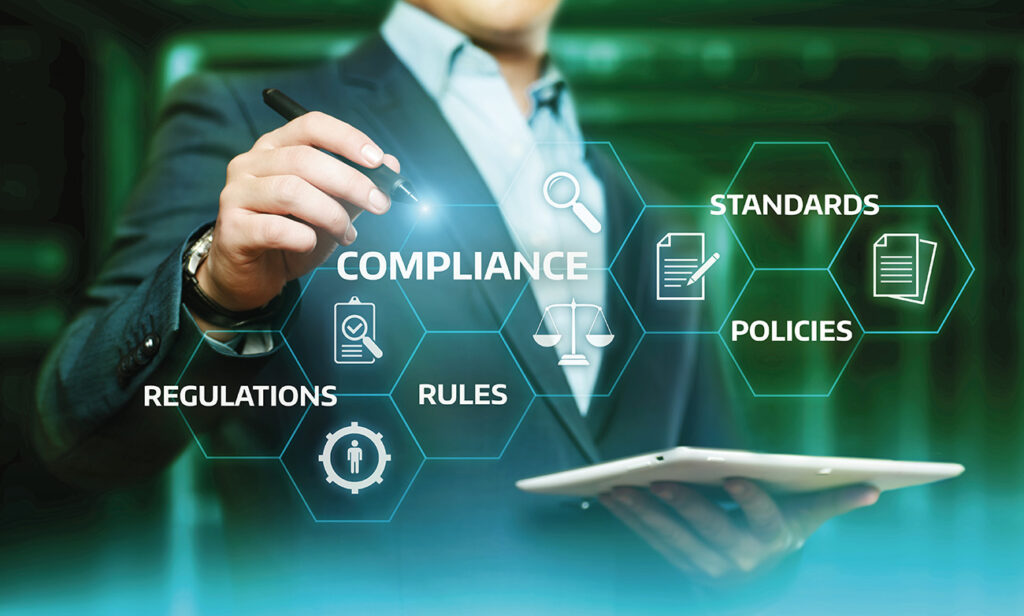
The range of duties of the QA manager is becoming increasingly broad. Besides controlling quality, the QA manager also has to deal with the environment, health & safety, food fraud and integrity, food defense, the logistics chain, CSR, business optimization ... As a result, the QA manager is shifting more and more towards BA or Business Assurance manager. Geert-Jan Rens, Senior Consultant Business Assurance and Lotte Schrauwen, Senior Consultant and Trainer at KTBA, a Mérieux NutriSciences Company explain this evolution.
Increasingly, companies are facing higher demands and expectations from their key stakeholders. They expect companies to know and fulfill their responsibilities, and the QA manager plays an increasingly important role in this. "If you look purely at the QA part, it's about implementing quality systems, procedures and working agreements related to food safety and quality, performing internal audits, and so on. But it doesn't stop there. The QA manager also plays an increasingly important role in strategic projects. Then it's not just about quality-food safety, but about all aspects of improvement in the company. QA is increasingly integrated into the bigger picture, making it evolve into BA," says Schrauwen.
Two themes that have been gaining importance recently are food fraud and food defense, she continues. "All product and supply chain fraud risks must be identified and controlled. There is a growing awareness that companies cannot always control everything themselves since external factors can also influence quality and food safety. Nevertheless, the aim is to have the chain as transparent as possible in order to continue to guarantee quality. Digitalization and data management are therefore becoming much more important."
"This realization is also fully present in companies," adds colleague Rens. "I once put forward the proposition in a presentation that the data quality of a product is just as important as the quality of a product itself. The audience appeared to completely agree. That was different years ago. Today, thanks to reliable data quality and data sharing, a company is much more responsive to the market. It leads to higher product quality, more transparency in the chain and better integration of processes into a bigger picture."
Schrauwen: "Moreover, when you have insight into your data, you know where you stand as a company and you can implement your process improvements and apply your improvement management from there. The QA manager knows the company inside out because quality is in the entire company. He is therefore a good discussion partner to help shape company-wide improvement processes with senior management. And if you get senior management on board, then the whole organization will evolve with you to take quality food safety to the next level."
So the complexity increases because of the integrated approach, making Quality Assurance evolve into Business Assurance. Rens: "Because different aspects in business operations are connected and you look at quality more integrally, it potentially becomes more complex. But what is complex is not necessarily difficult. There are various methods and techniques that can create clarity and provide better insight and transparency. Also, as a company, you don't have to do everything alone. Some companies take up the gauntlet themselves, others opt for external support." Schrauwen adds, "As KTBA ourselves, we visit many companies in various sectors. This allows us to bring best practices and to stimulate companies to look at their own business processes through a different lens. We can add knowledge that is not present within a company, for example, because of its size. After all, as a company you focus on your core business. By calling on external parties you can broaden your view and gain insights into other working methods and approaches to possibly shape things in a different - better - way."