Platform for the food and beverage industry
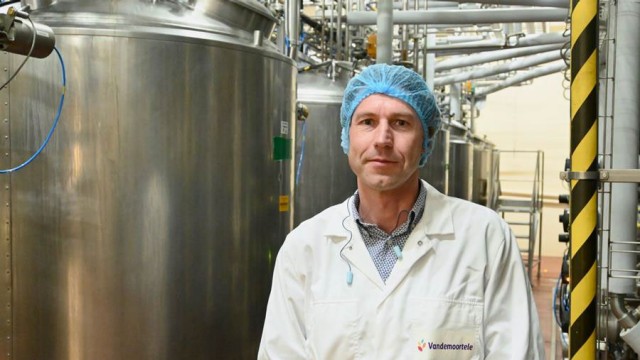
Siemens and Actemium direct production Vandemoortele.
Vandemoortele Izegem was looking for a new, integrated batch control system for the production of their emulsions, to replace their old system that was a customized standalone solution. Siemens and Actemium realized the desired control based on standard solutions, which means that the same system can be adopted in the same group's margarine factories in Barcelona and Dresden without many modifications. "We now have a future-proof system, which offers advantages toward flexibility, efficiency and ease of use, among others," states Group Automation Manager Christian Debusschere.
Founded in 1899, Vandemoortele is still a family business more than a hundred years later. Its parent site in Izegem is known as the largest margarine factory in Europe, where margarines have been produced and packaged since the middle of the last century. In addition to the MCOF activities (Margarines, Culinary Oils and Fats) today, the group also distinguishes the Bakery Products business line. Together they account for some 30 plants in Western Europe, generating total sales of 1.3 billion euros.
The production process here consists of three pillars. In the preparation phase, a liquid emulsion is made, starting from various ingredients. Then a solid structure is obtained through the crystallization stage. Finally, the margarines are packaged in blocks, wrappers or fleets, depending on their destination. Vandemoortele produces for food service and industry, as well as for retail. For retail, the group has a number of its own brands, but the largest share of production is white label for major distributors.
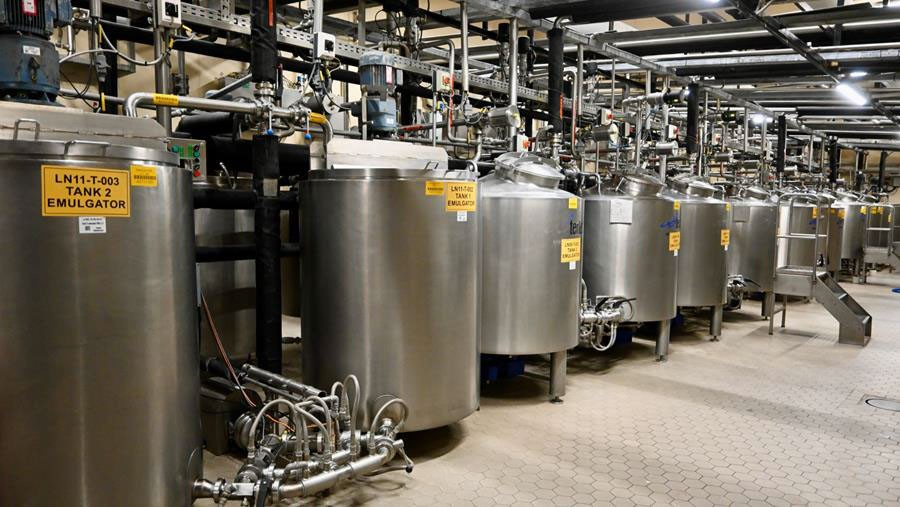
That preparation department was already automated, but the underlying customized software system was outdated. "That originated over twenty years ago and, although it was updated along the way, was now in need of a thorough overhaul. All the more so because there was no integration with our ERP and MES systems, so the data input was done manually," Debusschere states.
Therefore, they went in search of a new batch control system. This not only controls dosing and mixing automatically, but also monitors other functionalities, such as interim rinsing procedures or CIP processes during product changes.
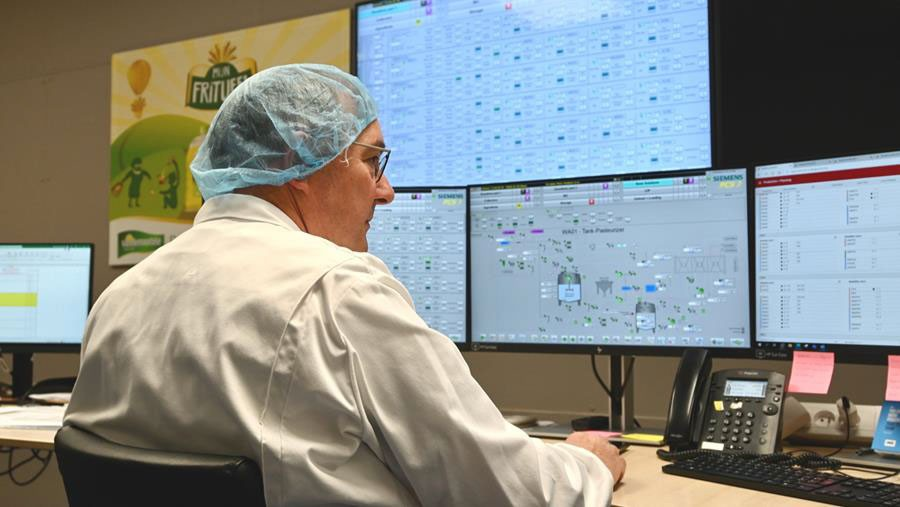
Vertical integration was an immediate prerequisite in this regard. In addition, automatic two-way tracking, better quality control on the shop floor, a better view of raw material consumption in real time and a better overview of the various process phases for the operators were also listed in the specifications.
"We submitted that to several technology providers, with Siemens and Actemium best able to meet our needs with their batch control according to the ISA-88 standard," Debusschere continued.
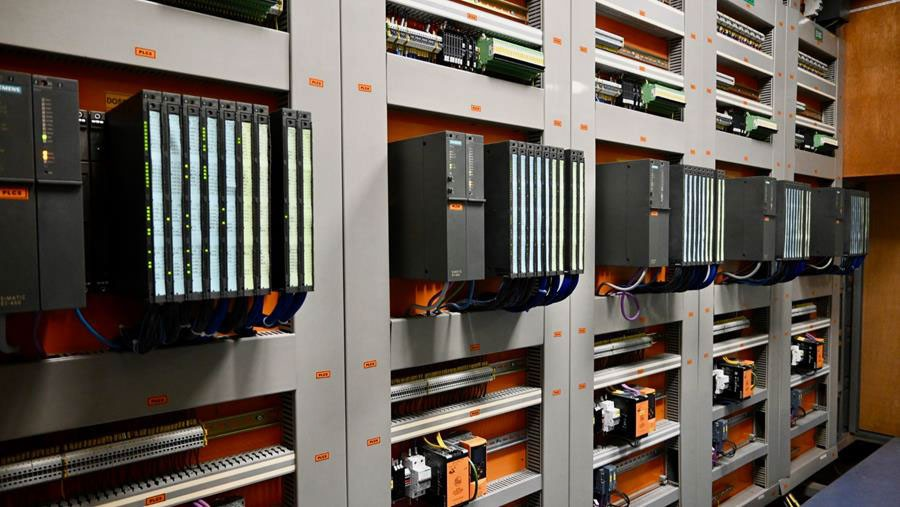
Siemens supplied their standard solution with Simatic Batch and PCS 7 for running the recipe steps. Actemium - Siemens Solution Partner - acted as integrator for the AS (Automation System) programming, visualization and a certain customization, adapted to the Vandemoortele installation. In addition to these software solutions, Siemens also supplied twenty new, more powerful ASs (Automation System).
How does the new solution meet the predefined requirements? "The available master data - both the definition of materials and recipes - comes from our ERP system, SAP. Production orders are also entered automatically from the ERP system into our batch control system, which now no longer needs to be done manually. Upon execution of those orders, the system records all tank movements and manual additions are scanned and checked via barcode identification, for tracking. In the process, there is also feedback to the MES and ERP systems. Furthermore, for example, we now perform a pH measurement after adding an acid, and that measurement is recorded directly on the batch via a mobile device. Real-time visibility of consumption and process progress has also been realized, thanks to a flow chart that visually displays the handling of the recipe steps," it sounds.
The selection procedure was followed by workshops and a long engineering phase for the elaboration of all details and programming by Actemium. The solution was then tested offline in acceptance tests, and then the start-up could take place in the Izegem plant. "In doing so, we gradually added line by line to the new system, so both systems temporarily ran in parallel and had to communicate with each other. That was a big, technical challenge," Debusschere looks back.
Communication between all parties involved was also a point of attention. Not only externally, between Vandemoortele and Siemens and Actemium as the 'golden triangle', but also between the internal teams of the margarine producer: the central engineering, master data, quality, R&D, IT, production management ... "We immediately involved these different departments in the selection and elaboration, so that we were on the same wavelength internally. In retrospect, this was certainly one of the keys to success. Finally, the knowledge transfer of the key users to all teams of operators, which went smoothly thanks to our preparatory change management."
After the pilot project in Izegem, largely the same solution could also be rolled out in the margarine factory in Barcelona. There it was done in one go during the planned winter shutdown. This summer the factory in Dresden will follow. "The fact that we worked with standard solutions offered advantages in terms of cost and speed," Debusschere says.
"Further advantages are that we now have a future-proof, integrated batch control system, where we can, for example, make adjustments in programming more efficiently. This therefore leads to greater flexibility in production, both in terms of recipes and physical installation. Furthermore, the system is more user-friendly for our operators and brings time savings for them, allowing them to assume a more flexible role in the plant. Finally, the automatic reporting gives us real-time visibility of the production process, consumption and traceability, in a quick and easy way," said the group automation manager.