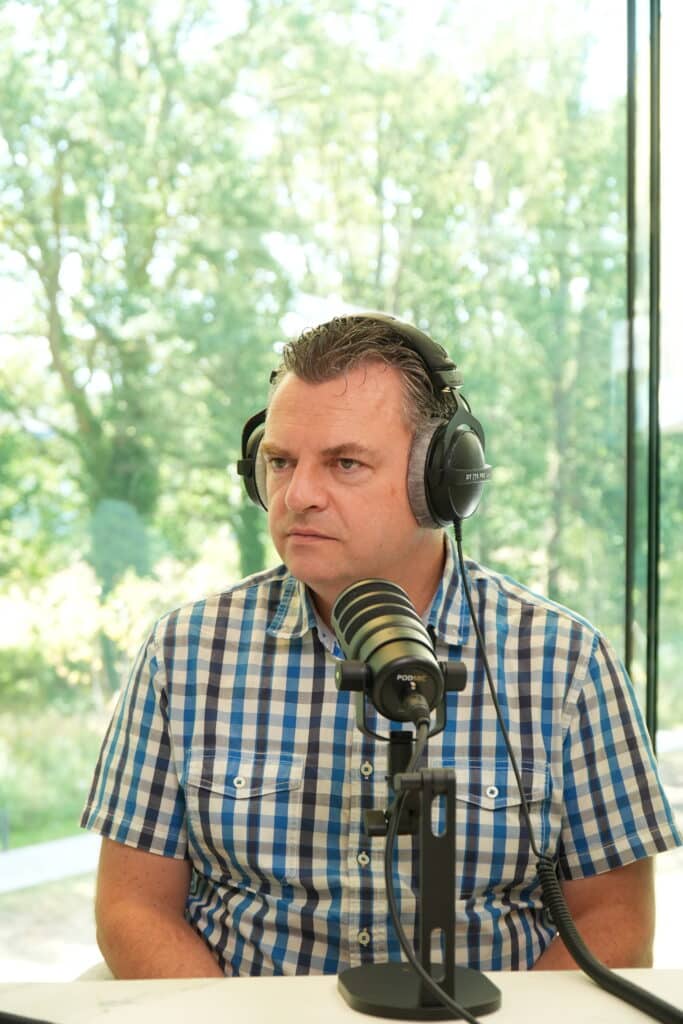
[00:00] Factories of the Future
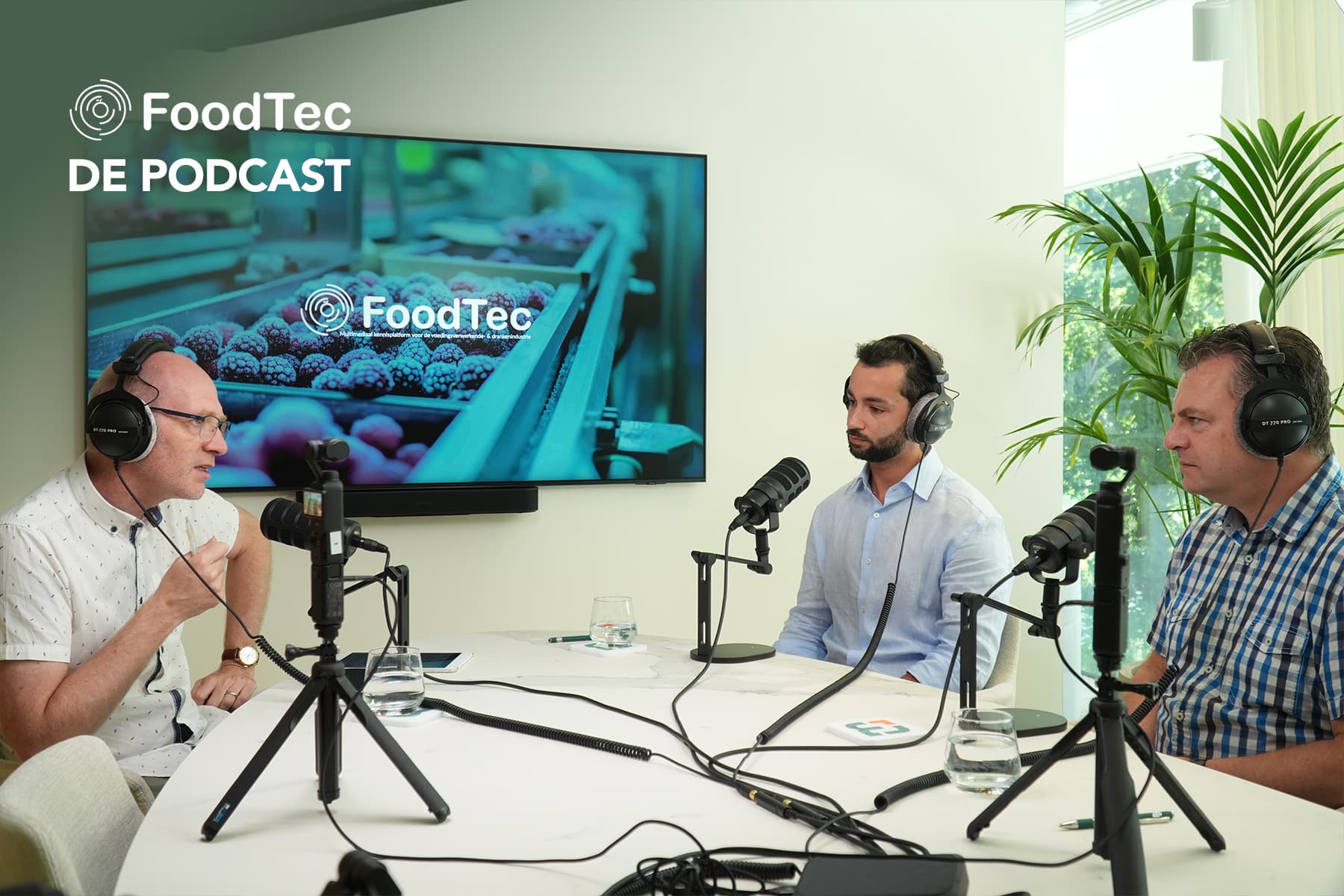
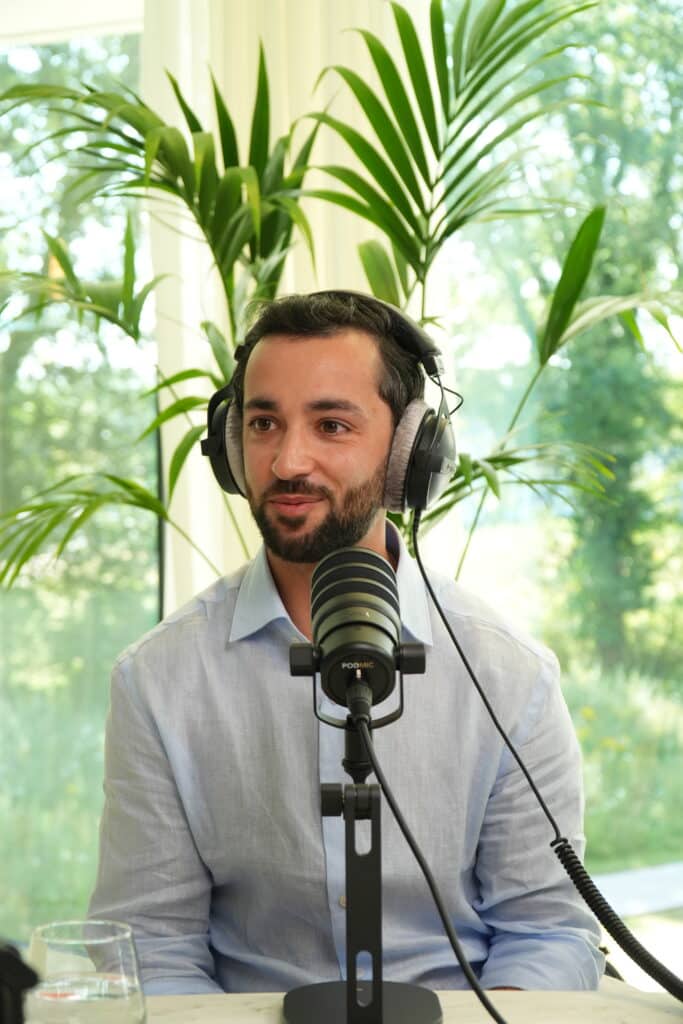
Björn Crul: Hello, listeners. Welcome to this new Foodtec podcast. Today, food companies face a dual challenge. On the one hand, they must deliver high-quality, food-safe products while simultaneously becoming smarter, faster, more efficient, and more sustainable. All of this must maintain profitability and also facilitate long-term growth. Automation, digitization, data, and AI are therefore no longer just buzzwords—they form the very foundation of what we call the factories of the future. Digitalization strategy—and what are the pitfalls you’d best avoid? I’m Björn Crul, and today I’ll be discussing this with Werner Fransen, co-CEO of Yitch, and his colleague Samir Barrahmun, Strategic Account Manager. Gentlemen, welcome to our studio.
Werner Fransen: Thank you.
[00:46] Smarter and More Sustainable Manufacturing
Björn Crul: Samir, shall I start with you? Today’s topic is the factories of the future—factories that are already being developed in full swing. How would you describe such a factory? What should we picture when we think of it?
Samir Barrahmun: Factories that enable us to produce more intelligently, more efficiently, faster, and more sustainably. And, I think, to ensure that we can continue to produce locally.
Björn Crul: And technology plays a very important role in that?
Samir Barrahmun: Yes, definitely. I think that’s actually essential to ensuring that we can maintain that efficiency, but also simply continue to manage those processes. No matter how efficiently or sustainably we produce, it’s very difficult to optimize those aspects. So that’s definitely important.
[01:38] Building Blocks of the Smart Factory
Björn Crul: We’re talking about automation, digitization, and making better use of data and AI. That’s exactly what your business is all about. So please describe how you see it—those different components of such a strategy.
Werner Fransen: Yes, for us, these are actually different building blocks that should ultimately lead to the smart factory. Perhaps I’ll just add to what Samir just said. It’s really about ensuring that our customers—manufacturing companies—can produce close to their consumers. And we do that by using those building blocks intelligently. For us, automation means controlling the machines, production lines, and process equipment within those factories. This is typically done through PLC programming, SCADA applications, and the like. Digitization involves digitizing the business processes on the production floor. Here, you mainly need to focus on the operators. They currently have to record a lot of data and enter a lot of information into Excel files and notebooks. We’re going to centralize all of that on a single platform, from which it can then be easily controlled and managed.
Björn Crul: So that’s basically going paperless, right?
Werner Fransen: Transition to a paperless workflow and ensure full traceability of everything. Optimize and digitize quality testing.
Björn Crul: Planning production orders and things like that. Will you also be able to use AI in the next phase?
Werner Fransen: A huge amount of data is collected from all these systems. And you can then use that data to generate smart insights for your management, your operators, and anyone else working in your company.
[03:21] Digital Transformation and Scale
Björn Crul: From your perspective on the Belgian food sector, are our companies pioneers in what I would call digital transformation?
Werner Fransen: I think Belgian and Dutch companies are definitely pioneers in the field of digitization. Compared to other countries—even within Europe—we see that they are investing heavily in these systems and in automation.
Björn Crul: But you probably need a certain level of scale to be able to invest in that.
Werner Fransen: Of course, a certain size is important in order to be able to make those investments. You also need a certain level of organization to successfully carry out such a project. But there are also solutions that can help smaller companies and SMEs or provide them with solutions.
[04:09] The Analysis Phase
Björn Crul: Yitch has a great deal of experience with automation and digitization projects across a wide range of industries, including the food sector. What does the ideal course of such a project actually look like for you? How would you prefer to approach it?
Werner Fransen: We actually prefer to start by gaining a solid understanding of the client’s problem. And typically, we do that by beginning with an analysis phase. We then get to work together with our client’s staff—both front-line employees and management. Our goal is to gain a deep understanding of everyone’s needs so we can develop a solid project or concept. With management, we look at where they want to go in the long term and what their strategy is. With the operations director, we want to know what he’d like to improve in his production process. And you really shouldn’t underestimate the operators. They’re the people from whom we need to understand the challenges they face. We need to work with them to figure out: how can we improve that? It’s especially important to involve those people right from the start.
[05:22] Roadmap and Scaling Up
Björn Crul: Samir, that's the first phase—the analysis phase. What happens next?
Samir Barrahmun: I think that after the analysis phase, we’ll draw up a roadmap based on the requirements that emerge from it. And that will be a comprehensive roadmap where we attach a business case to each step, which we can then implement step by step. Then, during the project phase, we typically start with small steps. We often begin, for example, by digitizing or automating a single production line. We then scale that up within the factory, to the rest of the factory, and possibly to other sites as well.
[05:59] Greenfield and brownfield
Björn Crul: Is there really a big difference between a factory building a completely new facility and digitizing or automating a production line in an existing factory?
Samir Barrahmun: Both have advantages and disadvantages. Of course, I think that with a greenfield project, you can typically start with a clean slate. So there, you get to work from scratch with new machines and entirely new systems. Of course, the analysis phase is still very important there as well. So we still have to develop a very solid plan for that—create a roadmap. But I think that makes things a bit easier in the beginning. What you typically see with brownfield projects is what Werner already mentioned: involving the operators is, of course, very important. And they can really explain how certain processes run a certain way at those brownfield sites, for a specific reason. They provide that context. And, of course, we can apply that more easily in brownfield projects.
[07:02] Project Team and Iterative Approach
Björn Crul: Werner, for your projects, you always work in a project team that includes representatives from the client. Who should be part of that team, and why is that project team so important?
Werner Fransen: That’s the logical next step after the analysis phase. So during that analysis phase, it’s also very important to involve the right people from the client’s side. And you really need to carry that approach through the entire implementation process. What’s certainly important here is having enough people at the table who understand their processes, who know how a production process works, who know their products, and who also understand the impact of certain changes we might implement. But it’s also certainly important that management is at the table. They must definitely be represented in steering committee meetings so that they continue to follow the project closely and so that it remains—and becomes—a strategic project for them as well.
Björn Crul: Does that mean you sometimes have to make adjustments or tweak things as you go along?
Werner Fransen: Absolutely. And that’s actually kind of unique to these kinds of projects. We often work in an iterative way, where you present things to clients in short iterations. We start with a specific idea, but there’s a lot of evolving insight along the way. And if you can incorporate that evolving insight through the iterative approach, you can actually arrive at an optimal solution for the client.
[08:32] Custom or Standard Solutions
Björn Crul: Samir, when it comes to implementation, do you generally opt for custom solutions or more standardized ones?
Samir Barrahmun: Yes, that’s always a point of discussion, of course, and one that often comes up very early on in the process with potential clients or partners. We try to start from the standard as much as possible. Simply put, that has a number of advantages. Namely, it’s easier to implement updates. It’s easier to roll it out to other sites. It’s also easier to implement. But here at Yitch, we also understand very well that for many manufacturing companies—especially food companies—a specific process can actually provide a competitive advantage. To support that process, we’re always open to exploring how we can do that. I think that at Yitch, we operate independently of any specific brand. So we work with different hardware and software. That makes it easier for us to choose what best suits each specific customer. But that also means we’re not limited when it comes to applying a degree of customization to the solution.
[09:44] Support and Continuity
Werner Fransen: I think it’s important that we do indeed work with standard platforms. You have to be able to continue supporting those customers afterward as well. We have an entire support team working on that today—our continuity team. And if we stick to standard solutions as much as possible, it’s easier for them to provide that support. If you go too far down the path of customization, you’ll have to keep investing too much in training those people just to be able to continue supporting it properly.
[10:23] Investments in Machinery and Software
Björn Crul: You can have machines and production lines that are updated. But very often, there’s also a software layer involved, so you end up with a combination of an investment—a capex—but also an opex component. I’m wondering, Werner, how do the finance people in those companies handle that? And what are the issues you sometimes run into?
Werner Fransen: Those are indeed often challenges. You know exactly how much each brick costs, and you also see that brick being laid. It’s easy to calculate the cost of the building. If you look at a production line, that’s also easy to calculate. You have a specific investment cost; you know that the line will produce a certain amount of additional output, so you can calculate your ROI very easily. And the more you move toward software solutions—which are absolutely essential in smart factories today—the more often the ROI isn’t immediately measurable.
[11:30] ROI of SaaS and Digital Transformation
Björn Crul: And certainly not for SaaS, perhaps?
Werner Fransen: Certainly not for SaaS or digitalization solutions. So you’re really going to have to look at where efficiency gains can be made. But even there, we work very closely with the client to examine: what is your process? Suppose we can eliminate that problem with a software solution. What benefits could that bring you? We try to estimate that as accurately as possible. And that often helps them make smart decisions.
[12:03] The Importance of the Business Case
Björn Crul: Yes, it’s actually much more than just thinking about digitization. It’s also about thinking about the business case.
Werner Fransen: Absolutely. Everything hinges on a good business case. If you don’t have a business case, you’ll never pull off a good project. Or you might start a project, but it’ll get shut down halfway through because people have lost faith in it.
[12:21] Specific Challenges in the Food Industry
Björn Crul: Food companies face a number of very specific challenges. Obligations related to traceability, food safety, and labeling. But they also need to be able to produce very flexibly. In smaller packages, in larger packages. Perhaps different product formulations. And on top of all that, there’s everything related to sustainability: reducing water waste and being highly energy-efficient. The solution often lies in smarter production and the use of real-time insights. This naturally raises the question: Is that data easy to find? Do companies even have that data?
[13:01] Unlocking and Structuring Data
Werner Fransen: Companies have a massive amount of data. The biggest problem is that this data is often locked away in systems or silos. And that’s exactly where our job comes in: to ensure that we can make that data accessible. It’s very important to bring that data together on a single central layer, on a single central platform, but above all, to structure it. And that is indeed the future—it’s something everyone needs to be working on and thinking about.
[13:34] The Data Foundation
Björn Crul: But first, you have to get your foundation in order.
Werner Fransen: First, get your foundation in order. You have to make sure the data is available, high-quality, and properly labeled. And once you have all that, then you can start doing smart things with AI, for example. But don’t underestimate what you can already do with data today, simply by applying statistics to it, by just analyzing it. AI has become a bit of a buzzword that everyone likes to use, but there are so many simple possibilities you can already apply today.
[14:10] Process Optimization Without AI
Björn Crul: Do you have a specific example of a company where, by bringing data together in a very simple way, you can still achieve immediate results?
Werner Fransen: Yes, today we have a lot of customers who are already collecting data in historian and time-series databases. It’s very easy to run analyses on that data and see how your process is evolving. Even without using AI—just by applying a few statistical calculations—you can identify what the optimal process is and how much your current process deviates from the optimal situation, and then make adjustments based on that. You don’t even need AI for that.
[14:46] Sustainability Reporting
Björn Crul: I heard you say just now that you really need to start bringing the data together from those silos. That’s certainly becoming very important for larger companies today, because we have the European CSRD regulations that require sustainability reporting. Not just for the companies themselves, but very often for their customers as well. I think that makes the whole thing even more complex.
Werner Fransen: Yes, I think what makes it particularly complex is the enormous amount of administrative red tape involved. And that’s what companies are most concerned about and dread. But a great deal of that data is already available in the systems currently in use at manufacturing companies. You can also automate a great deal and ensure that those reports can actually be generated more easily. And you can certainly see that many companies are giving this a lot of thought today.
[15:44] The First Step Toward Data Utilization
Björn Crul: Samir, what is the first step a food company needs to take to really make the most of its data?
Samir Barrahmun: Well, I think the first step—as Werner just mentioned—is making the data accessible. A lot of the data is already being logged in the various systems and is sometimes already stored in the different machines and PLCs. So I think that’s really the first step. But after that, it’s also about ensuring data quality—standardizing that data. What data will be useful to you as a company? Where are we going to collect all that data? How are we going to contextualize it? Because, for example, a vibration measurement from one machine doesn’t mean the same thing as a vibration measurement from another machine. And also: what data is essential for you as a company? That data might be much more important to you than to other companies. So I think that’s the first step.
[16:40] AI Applications in the Food Industry
Björn Crul: Werner, you mentioned it yourself just now. AI is a hot topic in every boardroom. The question, of course, is: are you already seeing AI applications today—specifically in the food sector—that are actually delivering results? Because we hear very often: yes, there’s a lot going on with AI, but before it actually reaches the point where it’s scalable and delivers results, there’s still a long way to go.
Werner Fransen: Absolutely. AI is already being used in vision applications. Many companies have cameras set up to film potatoes, for example. And then, based on those images, they can determine the quality and size of the potatoes. Based on that, they can then make smart decisions about what to do next—whether to sort them or take other actions. So AI in computer vision is already widely used in many companies today.
[17:30] AI for Process Optimization
Werner Fransen: Soon we’ll be using AI for process optimization. Then we’ll look at: When has our process run optimally in the past? Which batch was produced perfectly? All that data is already available. Once you’re able to look at the data you’re generating today during your production process and see how much you’re deviating from that “golden batch,” you can use AI and other tools to make adjustments very quickly.
Björn Crul: Samir, one question that naturally arises is: the more companies invest in automation and digitization, the greater the initial impact will be on production line operators.
[18:23] The Changing Role of Line Operators
Björn Crul: How do you see things today? Are the job profiles and skills of production line operators changing in these smart factories?
Samir Barrahmun: Yes, I think it actually works both ways. On the one hand, it’s becoming easier for operators—or for people from different walks of life—simply because smarter systems can more easily guide operators through the process. So, on the one hand, you see that it’s also becoming easier for factories to hire people. On the other hand, you also see that the role is starting to change a bit. We’re seeing that many operators are currently acting more as executors during the process and are increasingly monitoring the process with the help of AI. So where AI or machine learning might already say: “It ran this way last night, and that’s due to this cause. So I suggest that, to avoid downtime, we slow down production a bit during the afternoon shift,” for example.
[19:27] Training and Guidance
Björn Crul: Werner, what does that mean for the projects you’re carrying out for those operators? Do you also provide some training, for example?
Werner Fransen: Absolutely. Training is important, but so is guiding them through that change. By involving them from the very beginning, we keep them in the loop throughout the entire process, and they actually become somewhat of a co-owner of that project, of that new implementation. And that ensures they’re trained along the way. Apart from that, we’ll of course also make sure they’re fully prepared through training sessions and courses on the new plant, so they can work with it effectively.
[20:10] The Shift Toward Dark Factories
Björn Crul: If we take that line of thinking a step further, the question is: how will these smart factories continue to evolve in the future? Are we heading toward so-called “dark factories,” where only robots and automation are needed?
Werner Fransen: We will certainly evolve toward factories that are highly automated. And that will certainly mean that certain parts of the factory will operate without people. On the other hand, that might not necessarily be something we need to fear. After all, there are many companies today that already operate with fewer people, yet this has actually allowed them to grow. They’ve been able to produce more with the same number of employees. However, they’ve reassigned those employees to different roles. They’ve ensured that those employees can focus on tasks that add more value. They’re no longer picking up a sandwich that fell off the assembly line, for example, but can instead focus on how to improve quality. Can they conduct additional quality tests? Can they guarantee that the end customer receives a better product? Roles will change. People will change. Factories may become somewhat like “dark factories,” to use a not-so-popular term. But that won’t necessarily happen without people.
[21:28] Pitfalls in Digitization Projects
Björn Crul: It does happen sometimes that a digitization project fails. I certainly don’t want to comment on Yitch, but that’s just a general observation, I suppose. Based on your experience, what are the pitfalls to watch out for to avoid things going wrong, Samir?
Samir Barrahmun: Well, I think Werner touched on this a bit at the beginning, too. Our approach is to start with an analysis phase. Where am I right now? What existing systems am I already using? Do I want to keep using them? What requirements do we need during the process? But also: what are our business objectives as a company? So, for one company, for example, it’s more important to produce quickly. For another factory, on the other hand, it’s more important to produce flexibly, because they want to respond more quickly to market demand.
[22:25] Solutions, Support, and Continuity
Samir Barrahmun: Don’t start by looking at product choices right away; instead, first look at the solutions they offer. I think a second point is to involve as many people as possible from different levels within the company. So involve both management and the people on the shop floor—the operators. Because no matter how great a solution you create, if the people on the shop floor aren’t willing to work with it, it will never be successful. And third, I think it’s important to view it as a continuous process. It’s never really “the finish line,” so to speak—it’s actually just the beginning. And you should keep optimizing as you go along.
[23:01] A strategic decision
Björn Crul: Werner?
Werner Fransen: Yes, I don’t think I have much to add. The only thing I’d like to add is this: a digitization project like this—or building a smart factory—must be a strategic decision by management. And the organization must fully align itself with that decision. And what we see with customers who do that is that those projects are moving forward and succeeding. Companies that treat it as, “We’re going to implement software”—because right now, that project isn’t getting the attention it deserves. You really have to treat it as a business project, not an IT project.
[23:35] No Big Bang
Björn Crul: And perhaps it often comes down to the fact that people try to work toward a sort of “big bang,” where they switch from one system—or no system at all—to a new system overnight. What is your advice on this?
Werner Fransen: Often, that analysis also reveals what a smart approach would be. Then you come back to the organization. That organization has to be able to support it, too. And then it’s often much smarter to ask: Which smaller components should we start with? What’s the priority? What will deliver the most value in the beginning? Then gradually expand from there. And don’t get too carried away with big dreams—start small. Learn as you go, during the project and throughout the process. Then expand further.
[24:25] Continuous adjustment and optimization
Björn Crul: It almost follows from that that the process is never finished.
Werner Fransen: Customers evolve, and the products that need to be made evolve. And that means you have to constantly make adjustments. That’s why we have a continuity team within our company that ensures not only production and business continuity, but also the continuous optimization of those smart factory projects.
[24:51] Closing
Björn Crul: Werner Fransen, Samir Barrahmun, may I thank you both for this interesting conversation?
Werner Fransen and Samir Barrahmun: Sure, thank you.
[25:03] Learn more
Björn Crul: You can actually do a lot with data even before you switch to AI. Would you like to learn more? Be sure to visit our website, Foodtec.be. Thanks for listening, and see you next time.