Platform for the food and beverage industry
The scarcity of raw materials in food & beverage has led to more cases of counterfeiting than ever before. Counterfeiting not only has a negative impact on food companies' sales, but also jeopardizes their brand reputation. After all, counterfeit products do not adhere to quality and food safety standards. The key to preventing counterfeiting is transparency and validation through the entire supply chain. Markem-Imaje works closely with its customers to create customized automated solutions.
Counterfeit goods account for 2.5% of what is traded globally. "Although most people think of designer clothes and perfumes, any product is at risk of counterfeiting," said Tessa Eastman, Connected Products Stategist at Systech, a solutions division of Markem-Imaje. Current conditions have created a perfect storm for counterfeiters. "There is a shortage of products right now. The aftermath of the corona pandemic, the scarcity of personnel to operate production machines, geopolitical conflicts ... it has all had a major impact on our global supply chains. Combine that with the digital disruption enticing more consumers to store online ..." The U.S. National Groceries Association calculated that counterfeit products cost them $10 billion to $15 billion in sales each year.

But even more important than financial losses is the potential brand damage. "For these reasons, the big, established brands are well aware of what counterfeiting means for their business. Although more common with more expensive products, counterfeiting is proving to be primarily a crime of opportunity. If there is a shortage somewhere in the supply chain, risks arise," Eastman warns. The most popular categories today are olive oil, honey and seafood, but Systech also works with companies that produce water, alcoholic beverages or baby food. In April this year, 20 pallets of counterfeit baby food were seized and destroyed in Germany. "Just think about the impact counterfeit baby food can have. Counterfeiters do not care about the standards in food safety that food companies use as a starting point in production. More than 1 million people die each year from counterfeit medication. We want to avoid such scenarios in food & beverage," Eastman adds.
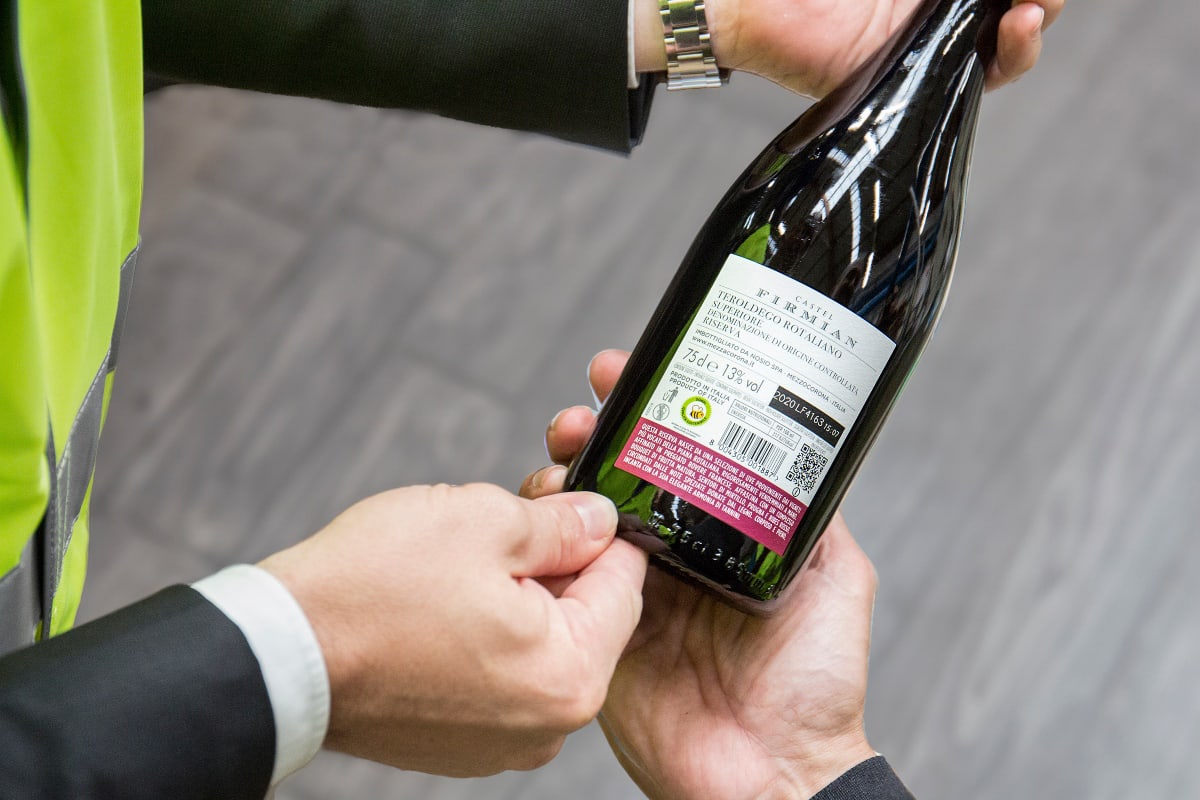
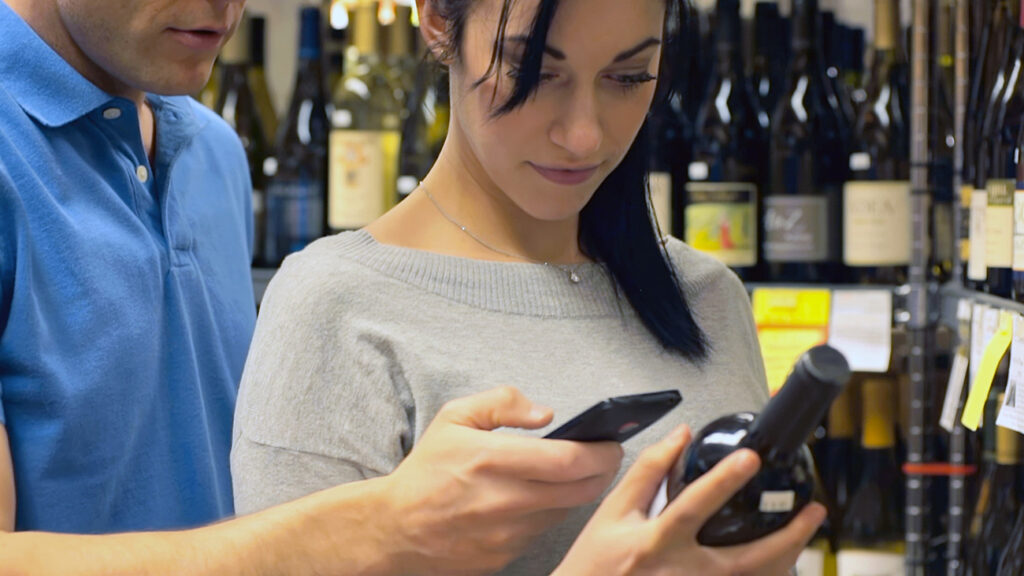
The problem is clear, but solutions are less obvious. Counterfeiting can occur anywhere in the supply chain, and no two companies face exactly the same problem. In Systech and Markem-Imaje's solutions, transparency and validation are key to success in anti-counterfeiting. "If you can trace a product through the entire supply chain, from individual raw materials until it lands at the consumer, you make it much more difficult for counterfeiters. We work closely with food companies to first identify the problems and then develop a solution based on their specific needs." Systech has a wide range of technical products and expertise in this area. One of these is UniSecure with its digital e-Fingerprint technology. "Labels with a linear UPC barcode and an e-Fingerprint are impossible to replicate," Eastman assures. "Every product put into the marketplace is stored identifiably in the Systech cloud. Anyone in the supply chain can then verify and authenticate the label through the Systech app. Consumers can do the same."

A multinational company producing sixteen different top shelf alcoholic beverages is currently applying this technology. Loss of sales and more importantly consumer safety were the main drivers for investing in e-Fingerprint technology. The pilot project set up by Systech became a great success, both in terms of accuracy and response time. Inspectors can now check the authenticity of products in real-time via a quick scan with the Systech app. Eastman: "What sets us apart is the scalability of what we offer. Our solutions can be adapted to any volume without compromising our customers' operational efficiency. And that doesn't just apply to counterfeit detection. Our technology can just as easily be used to provide consumers with information about the origin and sustainability of the products they buy. It can tell a story and contribute to the consumer experience. In a world where food companies feel competition from all over the world, a strong brand is more important than ever."